Your Neighbour Kills Puppies: Inside the Animal Liberation Movement
Tom Harris’s *Your Neighbour Kills Puppies* serves as a partial corrective to the under-historicization of the animal liberation movement, offering an 'insider’s account' of SHAC

“The communist movement does not react to the fate of victims—whether humans or animals.”
—Gilles Dauvé
Today we are flooded with images of protesters swarming corporate enterprises with anything from bricks to manure. Especially since Israel’s genocidal escalations in Gaza, Israeli arms manufacturer and defense contractor Elbit Systems has been subject to an international pressure campaign by the direct action network Palestine Action (PA), who have repopularized the strategy of focused, sustained economic disruption and secondary targeting. Their website claims many victories.1 For years, “divestment campaigns” had become synonymous with campus advocacy efforts and institutional endowments. Supported by dubious characters like Ban Ki-moon, Leonardo DiCaprio, and Bill McKibben, the strategy of divestment seemed to have lost its teeth, treated by all but the most vociferous adults in the room as democratic common sense. The more militant aspects of the recent Gaza solidarity protest wave have upended this idleness and put the question of pressure campaigning back on the agenda. For this reason alone, you should read Tom Harris’s comprehensive account of the Stop Huntingdon Animal Cruelty (SHAC) campaign, Your Neighbour Kills Puppies.
The animal liberation movement occupies an awkward place on the left. Gilles Dauvé once quipped that “protests against animal abuse parallel the general demand for a multi-cultural, more open, non-aggressive society,” which is to say, they lack a clear communist potential. But this is true of every movement. The communist character of struggle can only be determined ex post. Dauvé was thus sympathetic to the objectives of the animal liberation movement, which in the 1990s was quite vibrant and militant in the UK and mainland Europe. A witness to these developments, he engaged in a spirited exchange with the journals Antagonism and Practical History, publishers of the text, “Beasts of Burden.” There he laid out the basis of his critique, “no lifestyle is subversive.”2 Any subsequent engagement with the question of animal liberation has been conflated with veganism, especially as vegan commodities have become widespread in high-income countries. Perhaps following Marx and Engels in The Communist Manifesto, concern for nonhuman animals has been largely disregarded by the left as bourgeois sentimentality. The actual course of events is far more complicated and interesting, especially in England, birthplace of the Animal and Earth Liberation Fronts.
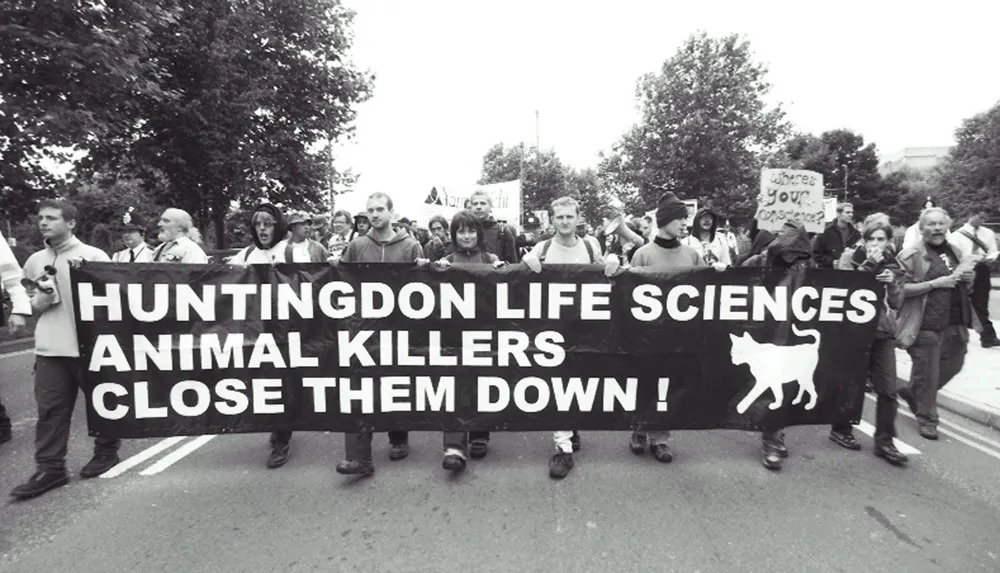
Tom Harris’s Your Neighbour Kills Puppies serves as a partial corrective to the under-historicization of the animal liberation movement, offering an “insider’s account” of SHAC. Widely considered the most influential campaign to emerge from the movement, SHAC developed the strategy of “pressure campaigning” to its often absurd ends. Its history is part brilliance, part scandal, and part tragedy, and Harris does his best to represent these competing claims on its legacy without betraying comprehensiveness or clarity. The book is part journalism and part memoir, as Harris himself was a major figure in the campaign, being sentenced to four years in prison for “conspiracy to blackmail.”
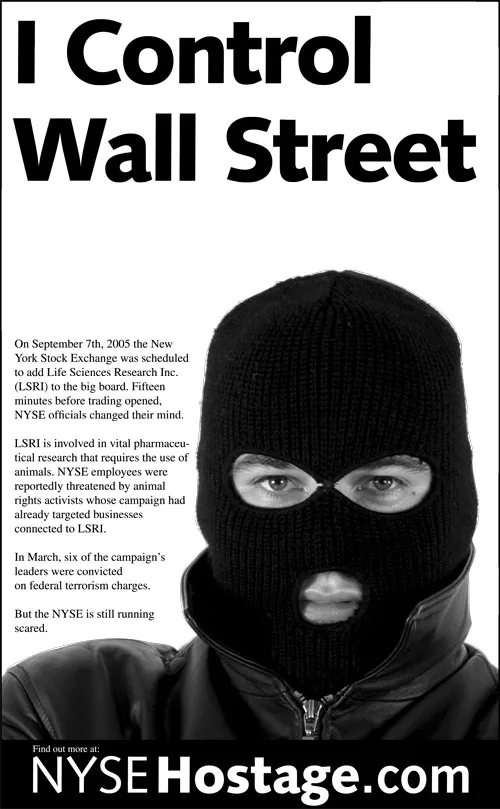
The story of repression is of course a major preoccupation of the text. Readers in North America and western Europe may be familiar with the specter of the “Green Scare” that hung over social movements since about 2005. Leaving a trail of political prisoners, the SHAC campaign played a major part in that wave of coordinated state repression. Important as they are, accounts of such repression have become ritualistic whenever paranoia seeps in. This book’s more important contribution consists of details about the campaign itself, its historical context and the development of a tactical repertoire that once led the Financial Times to declare hyperbolically that SHAC “succeeded where Karl Marx, the Red Brigade and the Baader-Meinhof gang all failed.” At its most basic, SHAC was a campaign to shut down the largest contract research organization (CRO) in Europe and the third largest in the world—Huntingdon Life Sciences (HLS). CROs provide outsourced research services for biotechnology, medical, pharmaceutical, chemical and food manufactures. HLS did this exclusively through animal research, involving egregious practices that became the topic of several media and regulatory investigations. One of these investigations revealed footage of researchers literally punching beagle puppies in the face to elicit submission.
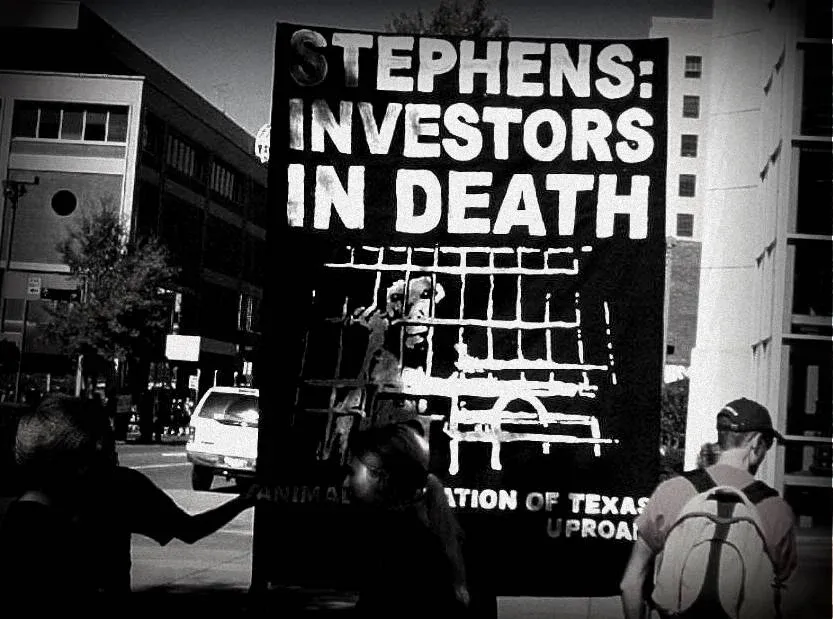
What was unique about SHAC was not necessarily its strategy of concerted pressure campaigning, which originated in postwar union campaigns before being developed by the Anti-Apartheid Movement. A more proximate example was the global anti-sweatshop campaign against Nike during the 1990s. Where SHAC differed was the extent to which it applied both strategy and tactics. Strategically, SHAC moved up and down the value chain from its main target, implicating linkages in finance, market making, insurance, breeding, shipping, logistics, and client contracts. SHAC even targeted HLS’s laundry services, caterers, utilities, and crematorium providers. What SHAC accomplished, inadvertently, was to highlight the actual working existence of finance and logistics in a period of their growing economic importance. In practice, SHAC respected a diversity of tactics—before this became an empty slogan recited by organizers of every large protest. And unlike the latter, SHAC did not take ownership of the movement to strong arm and suppress more controversial elements. Tactics involved protests at the homes of key figures, mass demonstrations, office occupations and disruptions, road blockades, pranks, clandestine property destruction and ALF raids, and even a large riot in Little Rock, Arkansas. Arson was also quite common, including burning down the alpine lodge of the former Novartis CEO. And the former managing director of HLS was the alleged victim of assault. Before murdering CEOs became a cool meme, SHAC operated in a climate that personalized the impersonal violence of capitalist enterprise.
The book includes all the unprecedented highs: twice delisting HLS from the New York Stock Exchange, sinking the yacht of a fund manager of the Bank of New York, smoke-bombing the offices of Marsh (the largest insurance company in the world), and forcing the evacuation of two Seattle high-rises. It also includes the familiar lows: frequent police raids, violent arrests, and prison sentences. What Harris does not include is a retrospective analysis of the campaign, 25 years on. This is clearly not his aim, to be fair. Coming in at just over 400 pages, the book is a partial history of the animal liberation movement from the late 1990s to about 2012. Still, it is difficult to know what to make of that movement in the absence of coherent analytical framing. Harris seems to end on an optimistic note, suggesting that we will see a resurgence of not only pressure campaigning (he notes Extinction Rebellion and PA as examples), but the animal liberation movement as well. This betrays his inattention to historical context and the factors that contributed to the rapid spread of SHAC and the broader movement as a whole. We are left wanting a materialist explanation, but no such account exists.
Something that Harris gestures toward but does not identify is how the timeline during which SHAC developed its financial-logistics strategy overlapped with a period of sequential financial bubbles: the late 1990s to 2008. He calls attention to the importance of biotechnology and pharmaceuticals to the UK economy (England being one of the largest pharmaceutical exporters in the world and a major center of laboratory animal breeding and trade) to explain the repeated government interventions to pull HLS back from the brink. This much was certainly true. Government ministers and trade organizations formed the Pharmaceutical Industry Competitiveness Task Force (PICTF) to ensure that the UK remained an attractive investment location for research and development. This focus on R&D occurred against a backdrop in which the UK economy was shifting from manufacturing to services. With the country losing traditional manufacturing jobs to primarily low wage services, investments in biotechnology, medical devices, and pharmaceuticals promised to provide some counteraction to hemorrhaging wage growth; really, they provided political ballast for the “New Labour” regime. What Harris ignores is how this “New Economy” period was able to underwrite the SHAC campaign itself.
The efficacy of the SHAC model depended on the bullish though turbulent character of equities markets in the late 1990s and 2000s. When alternative investment portfolios are abundant, the “risk” associated with holding stocks in a publicly-targeted firm with a tarnished reputation appears greater. Like many other firms, especially those with high fixed-capital investments, HLS had a large debt-to-asset ratio even before SHAC launched. This only worsened over the course of the campaign, as banks, private financiers, investment fund managers, insurers, suppliers, logistics providers, and customers—some of the largest corporations in the world at the time—jumped ship, drove down the market capitalization of HLS, and made debt servicing nearly impossible. When new lenders could be found, with great difficulty, the greater risk associated with the company translated into exceptionally high interest rates. Over the course of the campaign, HLS was removed from the London Stock Exchange, failed twice to be listed on the NYSE, dropped to the Over-the-Counter Bulletin Board then to the even less regulated “pink sheets,” and finally fell further into grey financial markets, its debt eventually being acquired privately before going through a series of mergers and acquisitions. Today, “Huntingdon Life Sciences” no longer exists. But as Harris remorsefully reminds us, its former labs, equipment, and facilities do, and the contract animal research continues under different names.
In the US and UK especially, where law enforcement agencies prosecuted sweeping operations to destroy the campaign and make examples of prominent organizers, the initial victories and ultimate defeat of SHAC are viewed as part of the Green Scare. This is certainly the conceit behind analysis such as Green is the New Red, which has become canonical in understanding the trajectory of the animal liberation and radical environmental movements. But history does not add up so cleanly. Harris provides strong evidence that the campaign survived despite major waves of indictments from 2006 through 2008, with new organizational iterations carrying the torch and increased underground activities as legal activism became criminalized. The turning point appears to be the 2008 to 2010 window. Here we return to the conditions that gave rise to the campaign: the Dr. Jekyll boom in equities markets, now transformed back into the Mr. Hyde of bust, crisis, and recession. As liquidity tightened and growth reversed, risks in holding particular stocks flattened, restricting the ease with which lenders could cut ties with controversial firms. In a downturn, stability and risk mitigation militate against any undue movement in holdings. This was compounded by the highly leveraged character of lending throughout the period, on the one hand, and the high interest payments that HLS yielded to its existing lenders. It was not that HLS was unprofitable, though it was hit hard by the recession. The issue was that its debt to assets ratio was high enough to suggest that future debt servicing seemed risky to new lenders. Other aspects of the campaign—targeting services, logistics, customers, etc.—certainly did eat into whatever profits were gleaned from its operations. At its height, SHAC was pressing against HLS from both up and down the value chain. What the recession did was generalize many of the risks associated with HLS, reducing the gap between it and potential alternatives.
Concurrently, the recession also meant increased unemployment, consumer debt, foreclosures, and wage stagnation. While the crisis was undermining the efficacy of pressure campaigns, it was also giving rise to new popular mobilizations against austerity, stagnation, and the state violence that manages these conditions. In short, SHAC was eclipsed by the return of proletarian militancy. While it never disavowed its working-class origins, the animal liberation movement tended to operate on the terrain of a reified moral conflict between humans and nonhuman animals without developing a material analysis of the relationship between class, race, gender and species.3 It never cohered around a clearly anticapitalist set of objectives, despite its subcultural anarchist tendencies. Despite some dynamic cycles of struggle, particularly in the UK in the 1980s and 1990s, “the animal people” arrived in the 21st century as a movement organized through the sphere of consumption, with no concrete analysis of production. As such, the movement imagined that animal use in production could be overcome by abolishing the status of animals as property, without necessarily abolishing property in general. It was in this sense that Dauvé characterized the movement as reformist. Because the object of reform was limited to animal use, class division and conflicts tended to be mystified in the figure of the “animal abuser.” This was carried on in the SHAC campaign and taken to its worst extremes, treating the “lowest rung” service workers only tenuously connected to HLS with the same vitriol as the CEOs of pharmaceuticals companies and the managing directors of banks. The slogan “your neighbor kills puppies” might have bounced off the mansions of opulent neighborhoods, but it was also a sentiment directed at anyone compelled to work in jobs even tangentially related to HLS’s daily operations. While there were efforts to develop a more nuanced approach to “power mapping,” the campaign never advanced a clear strategy that reflected the social conflicts permeating the animal research industry. It was thus unable to seize the energy of the new mass movements, which may have provided a second wind, breathing new life after the worst waves of repression. Instead, outside of green anarchist milieus, it faded into insignificance as new class compositions crystallized and dissolved over more recent cycles of struggles.
Today, when SHAC is invoked, it is either as a cautionary tale of state repression or as an inspiration to reinvent the strategy. Pressure campaigning never really left, of course. From Resistance to Interstate 69 and the Wet’suwet’en solidarity actions to the wider #NoDAPL campaign and the #sHellNo campaign against arctic drilling, hyper-focused and high-intensity campaigning has been with us continuously over the last two decades. None of these campaigns have reached the level of spectacle achieved by SHAC, nor have they generated the sequence of victories so lauded by its adherents. They persist as a matter of necessity in our era of fragmentation. The pressure campaign is particularly effective at channeling limited disruptive capacity. Whenever it appears as a prominent feature on the landscape of social conflict, this is symptomatic of underlying weakness. That it should be exhausted by the comparatively marginal animal liberation movement is unsurprising. If the post-recession decade has been characterized by the return of mass movements, then this has meant the eclipsing of the more limited aims and activist social base of the pressure campaign. In the fallout from the George Floyd Rebellion, we seem to be seeing some retreat from the long decade of mass movements and return to the more limited oppositional forms associated with the pressure campaign. PA and the campaign to Defend the Atlanta Forest/Stop Cop City (DAF/SCC), while attempting to develop a popular basis, have also adopted strategies of sustained disruption and diversity of tactics, pointing to SHAC as a model for emulation, or at least inspiration. Richard Barnard, a co-founder of PA, even lent a blurb in support of Harris’s book.
But the recent resurgence of the pressure campaign no more clarifies its limits than a cursory review of the SHAC experience. It appears today as a “forgotten” strategy, wildly effective at bringing down huge companies doing terrible things—all we need to do it pluck it from the shelf and give it a quick dusting. It would be one thing to study SHAC to avoid some of the blunders that facilitated repression, but now the model is often advocated as something to be emulated wholesale.4 Why did it apparently fade from view for so many years? Many partisans did continue to develop the model, with some such as Root Force even proposing that it be extended into a general strategy against capitalist infrastructure as a whole. Yet none of these efforts made much headway. Yelling “the SHAC model!” into the ether, they seemed to gain no response except disinterest or perhaps fear. But in reality, thunderous responses had begun roaring from all directions as proletarian rebellions ignited across the planet, burning down more structures and destroying more properties over single nights than protracted campaigns could claim after years of tireless organizing. Only now, as these flare-ups have burned out and mass protests have dissolved back into fragmented activist cults, do we see the return of the pressure campaign as an alternative outlet for our rage and disgust. It also just so happens to coincide with another sustained bullish market.
Here, our wager gets a little more acute: the pressure campaign, honed so well by the SHAC campaign and reincarnated by PA and DAF/SCC, offers great flexibility in targeted application, but extremely limited utility for any potential communist movement. We could characterize it as “market-mediated anticapitalism”—a movement against the ability of particular enterprises to capture the social profit. What SHAC or PA effect is a transfer of the total social profit away from firms deemed morally unworthy in a radical form of consumer advocacy. This is not to say that pressure campaigns are bad or a waste of time. The strategy certainly has its place and can render real material gains. We merely hope to point out the incoherence of Harris’ claim that “the campaign established a model that had the potential to drive any business out of existence. It was a prototype which threatened to revolutionise the concept of radical protest, and it was anathema to the entire capitalist system” (p. xiii). This is a claim to which many radicals and leftists would likely assent. Call it the domino theory of communism. It gains traction during moments of general weakness and retreat, when the possibility of a world beyond capitalism seems distant or simply impossible. Hey, at least we can pick and choose how this intractable presence allocates social wealth. Despite the frequent occurrence of property destruction in these campaigns, their implicit strategy is one of market selection. Expropriation appears ancillary, paradoxically employed to do no more than discipline the market’s invisible hand according to our ethical prescriptions. When the efficacy of direct actions is determined through market mediation, the question is, how can these actions make the leap to becoming communist measures that would undermine market-based society? If that leap can be made, the meaning of the campaign, with all its brilliant strategy and heroic tactics, would entirely dissolve into new conditions of possibility. This is the horizon we must bring into view.
A balance sheet of the animal and earth liberation movements, a militant sequence that clustered from the 1980s through the 2000s, has yet to be drawn up. Such an undertaking would need to account for not only the leading forms of activity, such as the SHAC campaign, but also their social content, including their composition and class character. The history that Harris offers here will be indispensable for this task. Like Dauvé, we anticipate those moments when the militancy of the animal liberation movement, once a common feature, spills over into communist measures, judged not by their formal characteristics, but by their capacity to carry out the communist program and, only then, the desecration of anthropocentrism. (Review by J.)
J. Caurine is a communist from the Timber Belt
Footnotes
-
No doubt a result of these successes, on July 5 of this year the UK Labour government designated the group a terrorist organization under the Terrorism Act of 2000. ↩
-
For a more detailed account and context of these debates, see the collected texts “Beasts of Burden: Communism, Domestication, and Animal Liberation” archived on the Decompositions blog. ↩
-
“Tragic Theses,” Decompositions (2023). ↩
-
See, for example, “The City in the Forest,” CrimethInc (2022). ↩