Remembering Sher Singh (1951–2025)
In 'Remembering Sher Singh', his comrades at Friends of FMS tell his story and, through that, provide a window into the social transformations and political terrain in which he tried to intervene. The result is a poignant memorial for an individual who dedicated his life to struggle and a sweeping history of the communist movement in northern India.
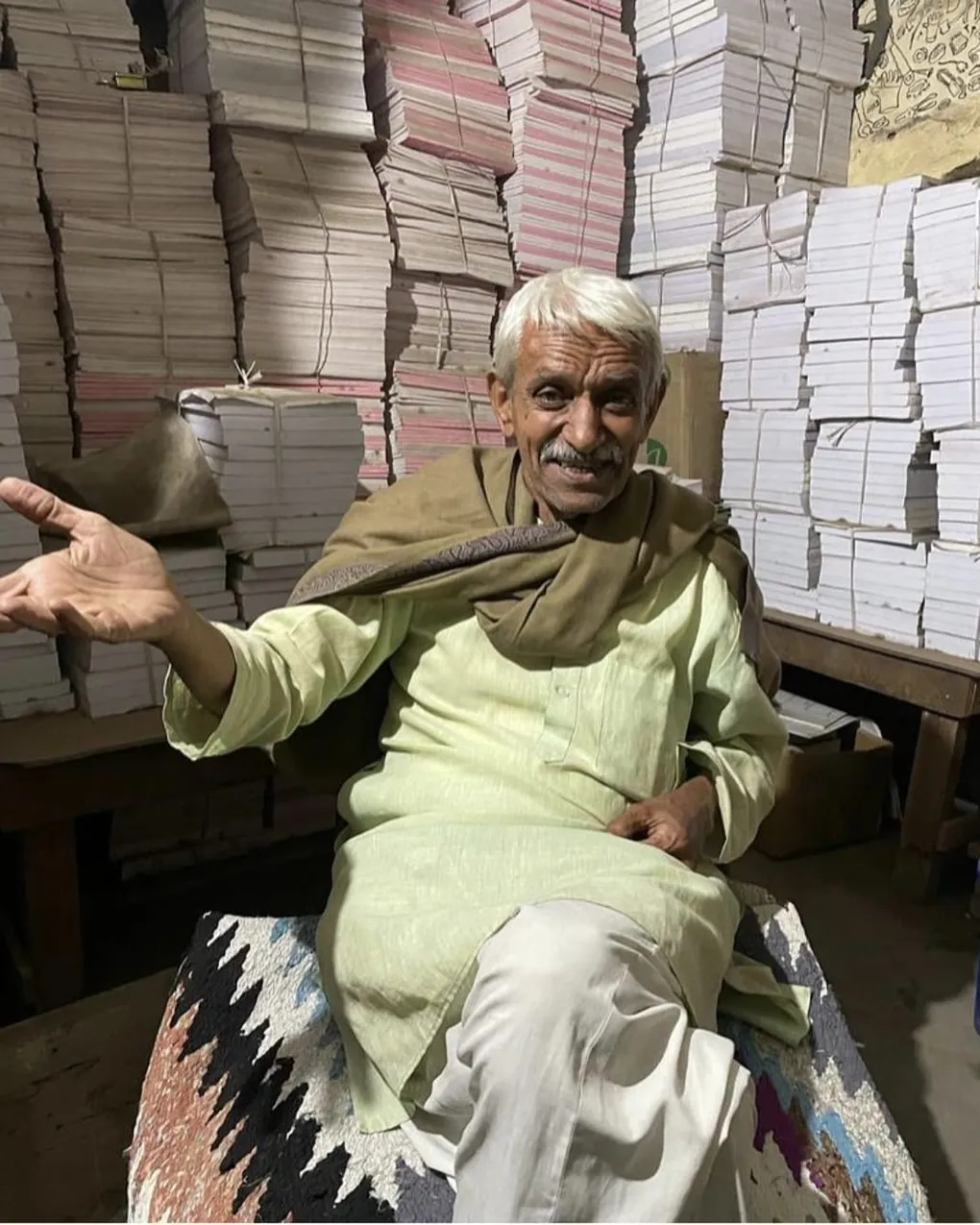
This article presents the life of Comrade Sher Singh, editor of Faridabad Majdoor Samachar (Faridabad Workers News) and member of several other communist groups based in northern India, including Kamunist Kranti and Collectivities. Written by his comrades, “Friends of FMS,” it tells his story and, through that, provides a window into the social transformations and political terrain in which he tried to intervene.
Over the past few months, Anglophone left media has been mourning the loss of Joshua Clover, Jacques Camatte, Fredric Jameson, and Loren Goldner (who played a key role in bringing Kamunist Kranti to the attention of Western communists), but there has been little discussion of Sher Singh, probably reflecting a certain parochialism of the milieu’s field of vision and personal networks. In line with our mission of promoting practical connections among comrades across the planet, and an ecumenical grasp of their diverse conditions and priorities, we hope to contribute to correcting this lacuna with the publication of this text.1
Sher Singh was born in Haryana’s Bhiwani district, in a village called Sandwa. Born into a family of peasants and soldiers, he was sent to a military school, where he spent his childhood in relative comfort. From there he went on to study engineering and international relations at elite institutions. The whole process pulled him toward becoming an “expensive cog in the machine,” as he put it.
Already at this age he had begun to feel a steady discontent with the existing state of politics. The national “Emergency” declared by Indira Gandhi’s Congress government in 1975 created a situation that funneled Sher Singh and many others into the Maoist movement.2 He gave up personal relationships and adopted the role of a “professional revolutionary” for the Communist Party of India (Marxist-Leninist), or CPI-ML, working full time as an organizer in villages and the jungle. A friend jokingly recalled that in this period, Sher Singh lost his taste for soccer and films.
The major communist parties of India considered (as some still do) the country to be a “semi-feudal, semi-colonial” society that was not yet fully capitalist. For this reason, he did not focus on the industrial areas in northern India, believing the real struggle was deep in the countryside.
1975–1980
Sher Singh moved about in the far-flung regions of Gujarat, Rajasthan, and Madhya Pradesh on behalf of the CPI-ML. He was part of a network of déclassé revolutionaries from the cities trying to “organize the masses” in remote areas without much state presence, toting rifles but mainly doing educational work among the unemployed. With high levels of state repression in the cities, an atmosphere of secrecy and hierarchy reigned within the party. Because it attempted to act as a vanguard for diverse sections of the rural population (peasants, workers, Dalits, “tribals,” etc.), the party was divided into numerous factions defined by competing interests.
Around this time, following the death of Mao Zedong and the rise of Deng Xiaoping, internal divisions within the CPI-ML sharpened. Sher Singh and some of his associates shifted focus: “Suddenly in 1979, it was felt that work should be done among the workers in the industrial sectors, not in the rural areas.” They may have realized that the fruits of hyperactivity they were looking for in the rural context were not likely to develop. As one comrade described it, “Sher Singh found that in fact the “tribals” were wage-laborers working for the timber mafia.”
From the accounts of that time, it appears that factory workers were also grappling with the divisions emerging within and among communist parties at the national level. After the CPI decided to support the Emergency of 1975–1977, workers who had previously voted the party into positions of power now abandoned it in many locales. In such a situation, Sher Singh’s group continued to interact with those workers through study circles, discussing “a little bit of Marx and a lot of Lenin.” It produced a booklet titled Mazdoor ka Ka-Kha-Ga (“The Worker’s ABC”), presenting a materialist philosophy of history for proletarian readers. The group also got its first taste of how the central trade union federations collaborated with factory management. In response it tried to set up independent unions and other forms of labor organizations.
Sher Singh felt that India’s Leninists saw themselves in a role similar to the Narodniks of pre-revolutionary Russia (focusing on the peasantry, etc.). To rectify this, his group prepared a program for the establishment of a “Marxist-Leninist Workers’ Party,” centered on the organization of urban proletarians. All activities were undertaken in secrecy, because now the danger was coming not only from the state, but also from the CPI-ML itself. Hoping for support, he sent this proposal to a senior leader of the party in Delhi, who had been active in one communist party or another for a total of 40 years. The leader responded by accusing Sher Sing of insubordination and dismissing him from the party.
While attempting to organize in the industrial zones of Madhya Pradesh (Indore, Gwalior, Bhopal), Sher Singh’s group discovered that the manufacturing sector there was already in decline. For example, the Jiyajeerao Cotton Mills of Gwalior, run by the Birla family since 1921, were facing serious problems in paying off loans.3 Eventually they were shut down, and apparently still have not settled accounts with 8,000 workers, the electricity department, and multiple banks.
In addition to such features of the global recession, the 1970s also saw the resurgence of widespread labor unrest throughout India—particularly in more modern industrial zones such as Faridabad.
1980–1984
Faridabad became the perfect laboratory for the radical experiments of Sher Singh and his comrades.4 Emerging as an industrial center only after 1947, this city had developed a more diverse manufacturing sector than those in Madhya Pradesh where the group had tried to intervene before—producing not just textiles, iron, or chemicals, but also electronics, footwear, motorcycles, and tools, fueled by a combination of domestic and foreign capital. Managers enjoyed well-planned housing while the workers had to build their own huts along the railway tracks. Labor struggles had been reported since the 1960s, becoming commonplace by the time Sher Singh’s group arrived.
Workers’ rejection of trade unions affiliated with the central federations, which the group had discovered in Madhya Pradesh, had begun to take on a greater scale and intensity in Faridabad. During the 1975–1977 Emergency, the state had already begun to collude with management to attack workers through forced sterilization and the demolition of slums. Standoffs with management frequently escalated into clashes with the police, and the union federations consistently sided against the workers. By the end of the decade, unions from 80 factories had broken with the federations and formed a “Workers’ Struggle Committee,” organizing huge processions of workers throughout the city. In October 1979, one of these processions ended in the Bata Square Massacre, where police opened fire on striking workers, killing hundreds.
When Sher Singh’s group moved to Faridabad, it still saw its mission as centered on “awakening” class consciousness. As in Madhya Pradesh, it organized study circles sitting together with workers to read classic texts aloud, including all three volumes of Marx’s Capital—which some of them read from beginning to end over the course of many evenings, during the brief hours between work and sleep.
During this period, Sher Singh also still believed labor unions to be necessary vehicles of proletarian organization, so his intervention focused on pushing for the removal of managerial stooges and the installation of honest, worker-friendly representatives, on the exposure of “fake communists,” on raising awareness about the oppressive nature of global imperialism, and on the popularization of Marxist ideas. Even though the group’s geographical locus had shifted from the countryside to industrial centers, its members still saw their role as that of an intellectual vanguard. This program comprised the central rationale behind their monthly newspaper Faridabad Majdoor Samachar (“Faridabad Workers’ News”)—FMS—when it first came out in 1982.
We have been unable to find copies of the first few issues of FMS, but key material was preserved in the 1993 collection Majdoor Andolan ki Ek Jhalak (“A Glimpse at the Workers’ Movement”). Many of the pieces featured agit-prop centered on uncovering collusion of unions with management, government, and police. The authors often tell workers what they should do, frequently criticizing them as “merely swatting flies” (i.e., spinning their wheels on ineffective activities)—clearly the language of a self-appointed vanguard.
FMS could engage in these activities only with the help of militant workers already taking the initiative to organize resistance. The paper became a medium for proletarians to express frustrations about their lives, and a supplement to their activities on the shop floor, helping them bring together massive groups of disenchanted coworkers against not only management bent on cutting costs, but also the unions that had come to stand in their way. While FMS emerged from a somewhat conventional project of intellectual vanguardism, it also began to uncover a new perspective through interaction with workers initiating their own struggles.
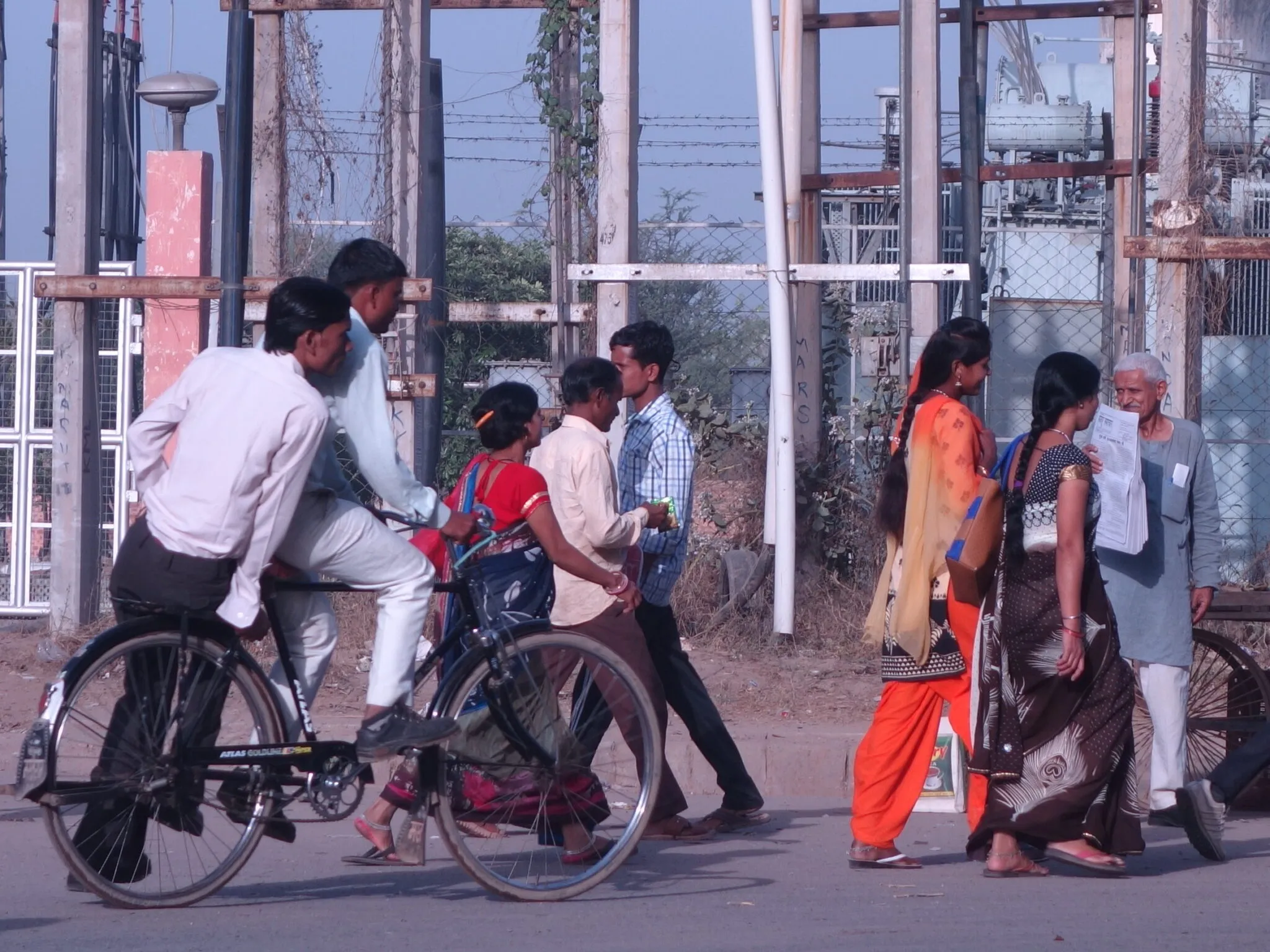
In weekly meetings with those from multiple factories, Sher Singh would urge them to fight for a “truly representative” union, recommending they pay dues and then pressure the officials to fight for their interests, but still about half the workers refused to do that. From their perspective, unions were defined by three things: (1) goons who intimidate the workers; (2) collusion with management; (3) the blessing of someone in the police or government. Their experiences taught them that unions were simply not meant to serve their interests. Faced with this sort of pushback, the group decided to stop publication in 1984 and rethink their formulation.
1984-1990
For the next couple of years, the group devoted less time to meeting with workers and more to reading and discussing revolutionary literature with other communists. Many of the workers who used to attend weekly meetings had become targets of the management. Some had their wages withheld, while others returned to their villages. Sher Singh moved to a comrade’s farm, where he delved into Marxist theory and communicated with sympathetic activists, while also playing soccer with neighbors. To support himself he took what would be his last paid jobs: as a tutor, and as a translator for Reader’s Digest.5 He later referred to this decade as a period of “drinking water from every ghat” (experiencing a wide variety of things in life). Now that a whole slew of inherited Marxist doctrines had been challenged by the realities of class struggle, he began to search more widely for theoretical inspiration.
For example, Sher Singh revisited Marx’s critique of political economy, and he learned about contemporary groups that recognized India as a fully capitalist society: the Socialist Unity Centre of India (SUCI) in Bhopal, the Revolutionary Socialist Party of India (Marxist-Leninist), and those who had split from it to form the Revolutionary Proletarian Platform (RPP). He met with members of these groups and began corresponding with the International Communist Current (ICC) in Europe. These communications encouraged Sher Singh to read Rosa Luxemburg, for example, but The Accumulation of Capital was not available for purchase at that time, so he found it at the library and hand-copied important sections to take home and study.
Some of Sher Singh’s conclusions from this period of exploration were presented in a 1986 article called Kamunist Kranti (“Communist Revolution”), including the following points:
-
The East India Company had introduced the widespread use of money through taxation and dependence on the sale of goods produced for the world market. Hence, India’s “feudal” period had ended long ago.
-
Between the feudal and capitalist periods, India was characterized by a distinct transitional phase called “simple commodity production,” based on domestic production for personal use and limited trade of surplus.6
-
Capital as “private property,” understood as the property of individual capitalists, was on the verge of becoming obsolete. Marx had already observed that joint-stock companies outcompeted privately owned firms, making capital a broader social relation that was now expressed in publicly traded transnational corporations and state-owned firms.
With these points in mind, Kamunist Kranti (what Sher Singh and his comrades became known as at this time—“KK” for short) resumed publication of FMS in 1986, with a monthly distribution of about 1,000 copies during this second period. They also mapped out new goals: promoting worker self-organization, with an understanding of trade unions as functionaries of capital, and taking steps toward the formation of a “Global Workers’ Communist Party.”
By the following year, many manufacturing firms were struggling to stay afloat, and unions increasingly sided with management and the police to weaken workers’ power. In the decades leading up to this time, as many as 95% of jobs in the manufacturing sector had been permanent. Both the bosses and labor law had treated workers as part of the firm so long as it was operational. But in the 1980s, Indian manufacturers were facing financial strain and more intense competition on the world market. In a bid to raise productivity, they tried everything from longer hours to wage cuts, automation, and layoffs. When these tactics failed, bosses resorted to looting whatever constant capital they could get their hands on and fleeing. Unions played the role of either keeping the workers in the dark or managing their opposition until the curtain lifted. One of the methods the unions adopted was what KK came to call “engineered strikes.”
When workers resist from within a factory, they can exercise a certain power by controlling the machines, raw materials, and finished goods. Traditionally, strikes were considered a form of proletarian power, but in the late 1980s, management-friendly unions began to use strikes to separate workers from the factories. In Bombay, 60 textile plants shut down in just a decade, with 250,000 workers left protesting in vain. Union-led strikes were instrumental in bringing workers out of the plants so the management could lock them down. Numerous examples of such engineered strikes can be found in the pages of FMS.
KK’s new perspective on these strikes changed their relation to the events taking place around them, now understood as part of a global transformation of industrial production and the contours of class struggle. As Loren Goldner put it in his article about the group, KK “does not mince words. […] in the 19th century, strikes were a weapon of the working class; at the end of the 20th century strikes are a weapon of management. Not just in Faridabad, or in India, but everywhere.”7 Today, when labor historians write about this period, they tend to agree that “neoliberal” efforts to restructure production dismantled the collective power of workers by dissolving them into global supply chains. This was as true of the Bombay textile industry as it was of coal mining in the UK or auto manufacturing in the US. KK tried to understand these events not as a defeat of the labor movement, but as a crisis within the class relation itself.
1990s
Thus far, we have seen a series of shifts: from understanding Indian society as semi-feudal to fully capitalist; from organizing the peasant and “tribal” masses to organizing the industrial proletariat; and from organizing “real” labor unions to a comprehensive critique of unions’ role in managing the class relation. However, the scope of these questions had been largely limited to the national level, in conformance with the conventions of Indian Marxism. By the 1990s, Sher Singh had begun to examine proletarian struggles from a more internationalist standpoint. KK thus came to recognize the importance of connecting with comrades in other countries.
It was not until they had corresponded with the ICC for a few years that KK began to reconsider its role as a vanguard. This correspondence called into question KK’s lingering desire to show workers the correct path forward, and this changed the content of FMS. Until then, each issue of the paper had included a column called “Marxism,” which included debates with activists, slogans, and radical quips, often phrased in abstract, jargon-ridden language. By 1993, this had begun to feel like a waste of time, so the column was discontinued. That same year, the paper’s length was increased from two to four pages, and the number of copies increased to 4,000 (still all distributed among workers in Faridabad).
Around this time, Sher Singh wrote that the character of both factories and workers was changing drastically. Permanent employment was disappearing from the manufacturing sector. Where FMS had only occasionally addressed temporary workers in the past, now they became the paper’s predominant readership.
Looking back through the 1990s editions of FMS in comparison with those from the 1980s, it appears as if the paper had been taken over by an entirely different team of editors. Gone were the criticisms of workers as “merely swatting flies,” lamentations of their miserable fates, and sloganeering about far-off Marxist organizations. Instead, the new FMS gave the sense of someone sitting comfortably and sharing their experiences, both good and bad, about work and their lives outside of work, rather than incessantly wailing about hardships. Gone was the pained, martyr-like attitude which today reads like a parody of leftism. The paper also frequently published letters, stories, and poetry submitted by readers. After 1998, more space was devoted to what workers were doing and saying, and the editorial voice was gradually toned down. KK had decided that “the 95%” of ordinary workers (as opposed to “the 5%” of activists) needed to be the focal point of their activities. While many left groups claimed to work for the 95% in some capacity, this often became a sort of populism symptomatic of the capitalist division of labor and social segmentation.
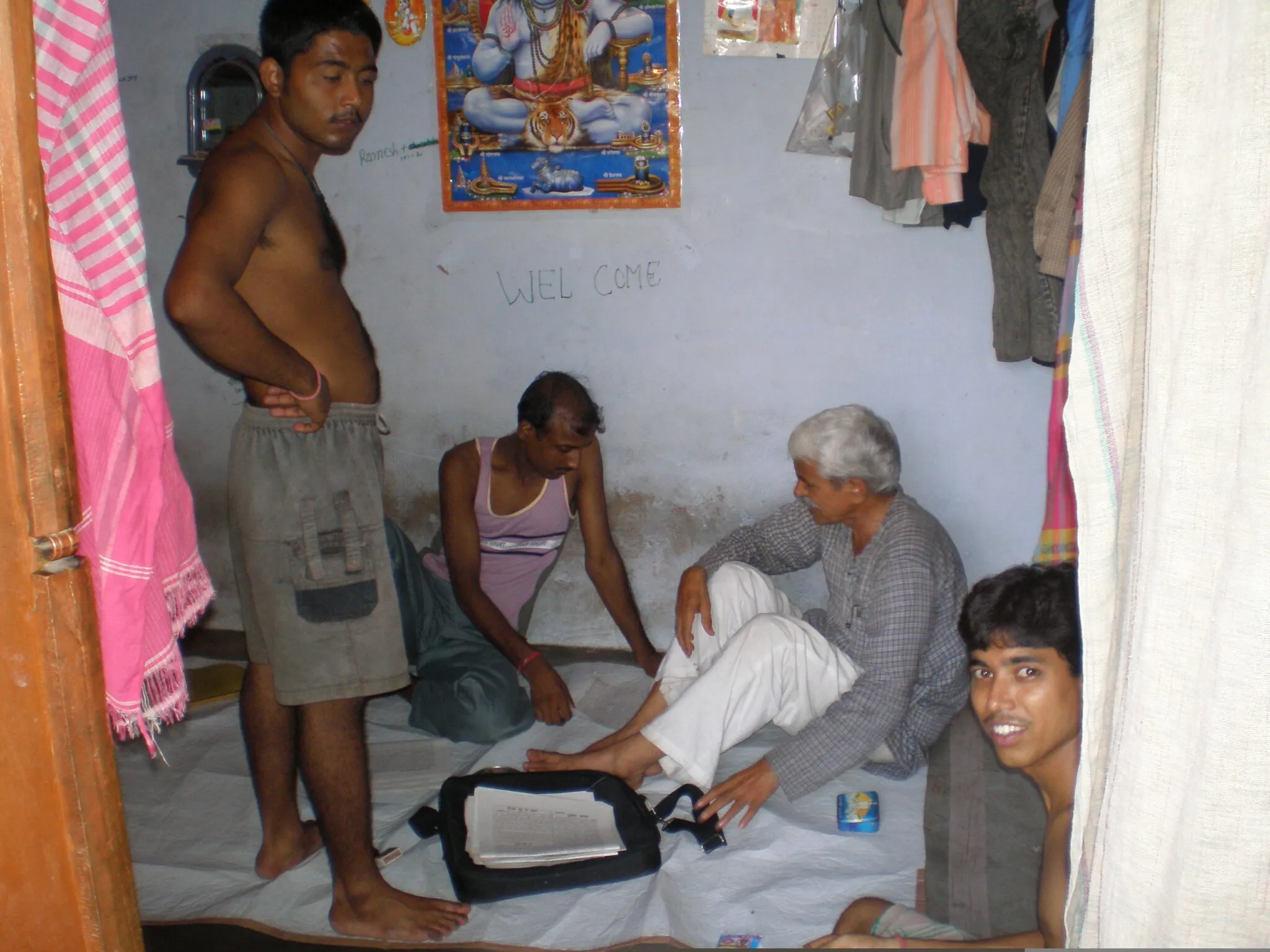
In the late 1990s, Sher Singh also interacted with students from a Maoist organization at Delhi University and others who were studying film at Jamia Millia Islamia. Despite obvious differences of background and perspective, several of these middle-class students became involved in the newspaper, sitting down for long conversations with the editors and factory workers. These interactions produced some of KK’s most well-known pamphlets: “A Ballad Against Work” (1996), “Reflections on Marx’s Critique of Political Economy” (1997), and “Self-Activity of Wage Workers: A Critique of Representation and Delegation” (1998). They also played a lot of soccer together, and Sher Singh travelled with them to visit comrades and investigate conditions in other parts of India.
Emerging Perspectives in the Early 21st Century
It is often said—sometimes critically—that FMS and Kamunist Kranti were “workerist.” We won’t delve into the definition of workerism here, but there is no doubt that a primary source of inspiration was the workers’ essential, spontaneous, and self-driven resistance to capitalism. However, to claim that this was their only source of inspiration seems incorrect.
First, it must be noted that after 1984, and especially after 1990, Sher Singh engaged in extensive correspondence with multiple activist groups. More importantly, FMS was a meticulous chronicle of the industrial system’s expansion across the National Capital Region (including cities such as Delhi, Faridabad, Gurgaon, and Noida). If the paper strove to doggedly present the workers’ side amidst (or in preparation for) such material changes, it was because its editors saw the project as not an academic endeavor, but a proletarian intervention.
We thus see that the 21st century brought new energy to their work. Faridabad was turned upside down by the introduction of new automotive plants owned by firms such as Honda and Maruti Suzuki. The nearby small town of Gurgaon became a massive “auto hub,” with thousands of factories set up to supply parts for local assembly plants, as well as for international supply chains. By 2007, 2,200 cars were produced daily at the town’s Maruti plant. Most of the workers there were temporary, overworked, and brimming with class anger. The next decade at Maruti Suzuki was defined by turbulent class war, as it was at other big auto plants like Honda, in many garment factories, and sometimes throughout entire cities such as Noida. We recall Sher Singh having a perpetual smile on his face during those years, delighted to see the renewal of mass proletarian action in the twilight of his life.
Based on these experiences, FMS tried a new organizational form that sought to converge around multiple points of contact in the National Capital Region. The paper advertised four addresses throughout the region as weekly baithaken (“gatherings”) for workers to share experiences with fellows from other workplaces. These were also intended as sites of local self-organization, from which critical proletarian groupings could emerge to permeate the area and expand the focus on intensified self-activity.
During these last years, Sher Singh described his role as merely that of an “investigator,” but one “of and from the workers’ side.” He had come to maintain a healthy distance from his earlier conception of himself as a “revolutionary.” Whenever he was obstructed by the police, goons, or even managers, his response was straightforward: if workers couldn’t meet here, they would find an easier place to meet, where there would be no restrictions. He calmly accepted that the issue was not about his personal rights but about facilitating communication with workers, and that aligning one’s personal struggle with that of the class was not as simple as many leftists assume.
By 2018, comrades in Faridabad, Delhi, Gurgaon, and Noida were helping to distribute 18,000 copies of FMS throughout the region each month. Sher Singh’s closest associates remained steadfastly by his side, distributing the paper regularly. After that year, they began giving bundles directly to workers, increasing distribution to 30,000 copies, with about 1,000 delivered by mail.
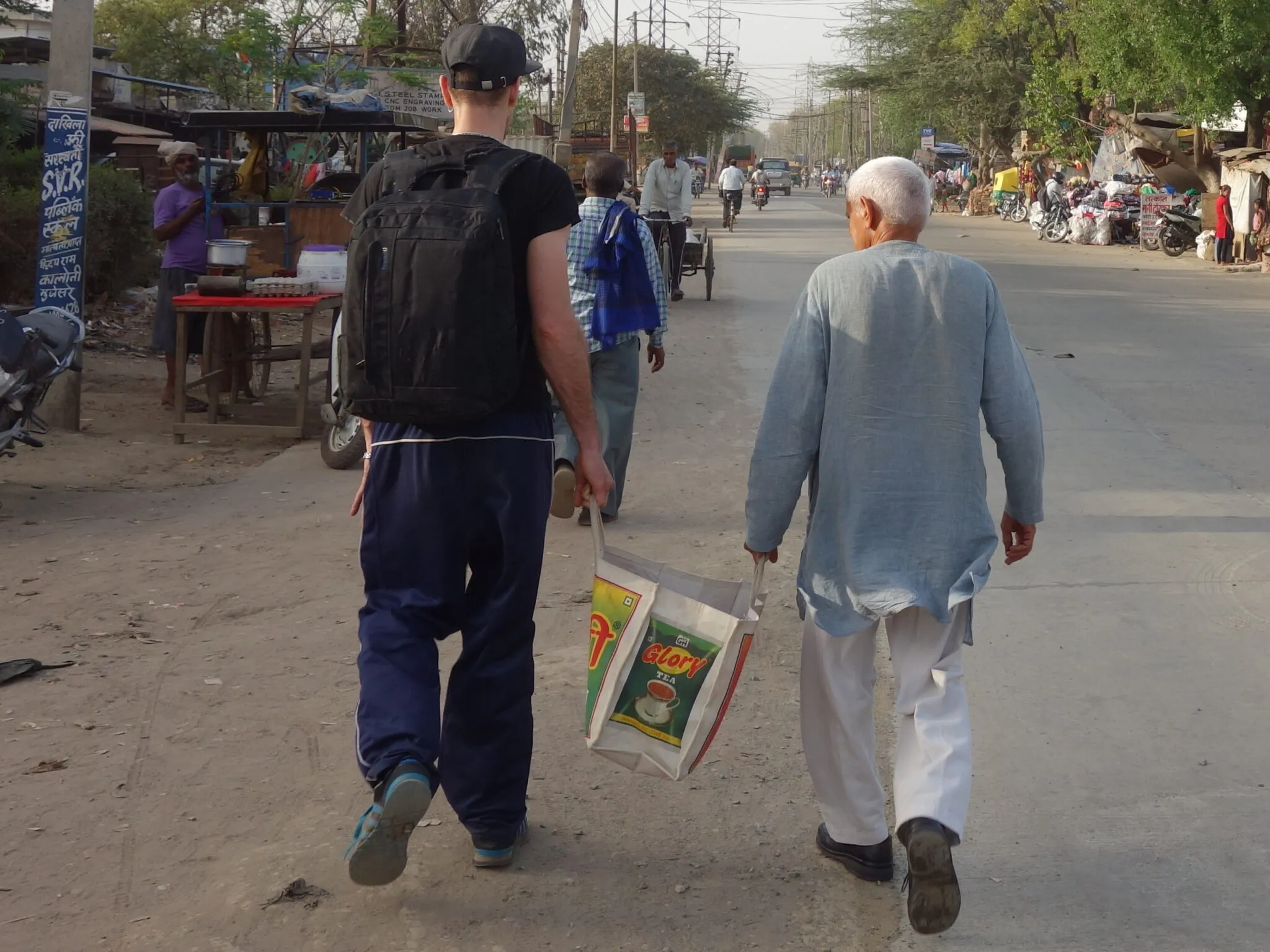
The 2020 lockdown brought an end to the newspaper. Sher Singh used this time to compile pieces from earlier issues into booklets and, in 2022, began traveling across the country. As he visited various cities and villages, he continued to spark conversations among workers and comrades, just as he had done for decades. He often said that “every person is an epic,” and certainly his life was nothing less.8
Friends of FMS is a group of communists based in northern India who emerged from work with the late Sher Singh and Kamunist Kranti. Their work can be found here
Footnotes
-
This article is an abridged, revised, and annotated version of “Faridabad Majdoor Samachar: Communist Possibilities from Self-Critique” written in Hindi and translated by Friends of FMS with assistance from YD. The full versions can be found at Kaamsechhutti.home.blog (February 2025). Also see related texts on Angryworkers.org (March 2025), including citations removed from this version. Special thanks to the author (who wishes to remain anonymous) for expeditious help in halving the article’s length by rewriting much of it within the limited time available for inclusion in issue 2, to Angry Workers for putting us in touch, and to YD for providing clarification and helping with annotations. ↩
-
The Emergency lasted 21 months, during which over 100,000 political opponents, dissidents, and journalists were imprisoned. The justification for this policy was a series of threats to India’s stability, including a major railway strike, assassination attempts, protest movements framed around socialism in Bihar and anti-corruption in Gujarat, as well as more narrowly political struggles within Parliament. The regime seized the opportunity to crack down on labor unions and left parties such as the CPI(M), although it is unclear to what extent those were the true targets of the Emergency. ↩
-
The Birla family comprises one of India’s oldest and most powerful industrial conglomerates. ↩
-
Faridabad (pop. 1.4 million) is the most populous city in Haryana state, a major satellite of Delhi, and a key industrial hub linking India to global supply chains—making it the world’s second most polluted city in 2018. ↩
-
After these years, Sher Singh relied on the hospitality of neighbors and comrades to support his extremely modest lifestyle. Monetary donations went directly to fund the printing and distribution of publications such as FMS. ↩
-
Sher Singh adopted this term from Engels’ misreading of Capital, chapter 1, where Marx had presented “simple exchange” as it appeared on the surface of capitalist society, abstracted from dimensions such as production. Setting aside the question of whether “simple commodity production” ever existed in Europe, it is interesting to see how this concept became helpful for Sher Singh and his followers to break with predominant doctrines in the Indian context. ↩
-
Loren Goldner, “Revolutionary ‘Termites’ in Faridabad: A Proletarian Current In India Confronts Third Worldist Statism,” Collective Action Notes (1998). ↩
-
If you would like to share your thoughts about Sher Singh ji, FMS, or KK, please send them to kaamsechhutti@gmail.com. ↩