Dispatches from Mae Sot, Part II: The Town of Exiles
A journalist by trade, Wu quickly became immersed in this town’s fascinating history and current role as a crossroads for political refugees and illicit commerce—a history that has led some researchers to call it an epicenter of “Dark Zomia” or “Zomia 2.0.” She took copious notes and recorded long interviews with young revolutionaries who had fled the junta’s counter-offensive in Myanmar, older refugees who had been stranded in Mae Sot for decades, migrant workers from as far afield as Tanzania, as well as Chinese entrepreneurs in the smuggling and online scam industries.
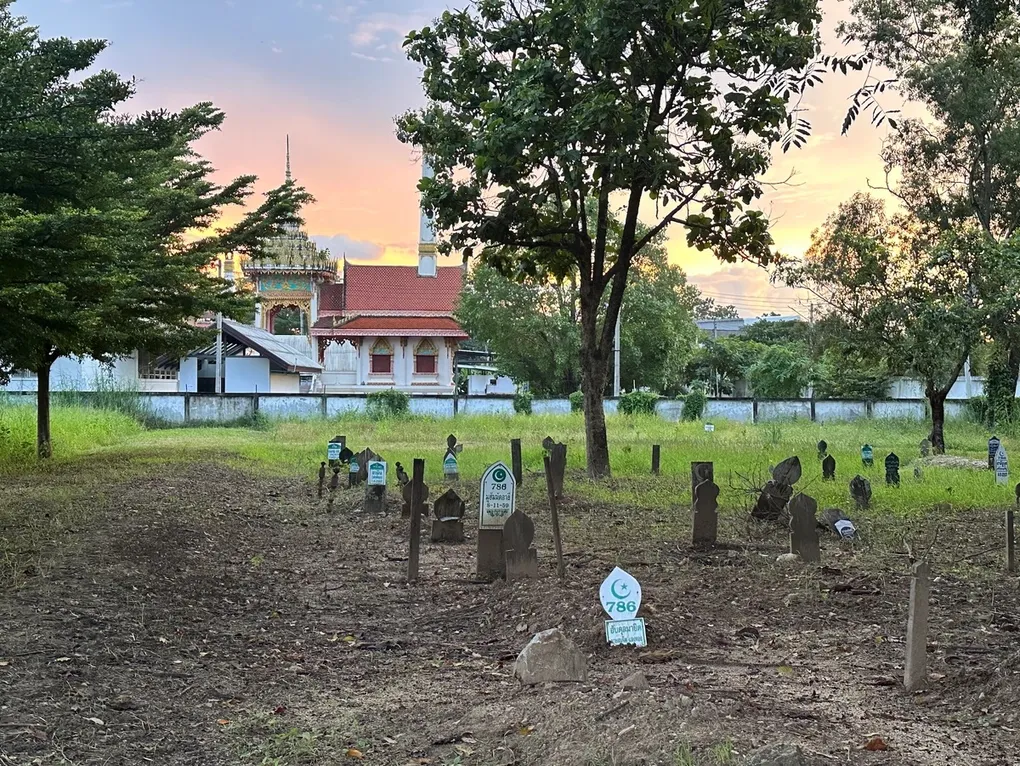
In Heatwave #1, we introduced this series of texts by a Chinese anarchist who left the PRC in 2022 and ended up in Mae Sot—a town on Thailand’s border with Myanmar. There she’s been chronicling the lives of exiles from the ongoing Spring Revolution that erupted after the 202 coup in Myanmar, partisans of Karen autonomy whose longstanding struggle has become intertwined with the revolution, Burmese Muslims (including merchants as well as those fleeing persecution since the 2010s), migrant workers in the region’s manufacturing and agricultural sectors who have been shuttling back and forth across the border for decades, and participants in the online scam industry run by Chinese triads (including workers from throughout Asia and Africa whose conditions range from outright slavery to “normal” economic compulsion)—to name just a few of the groups comprising 21st century Zomia. In this second installment, we follow a labor activist who smuggles drone components and takes guerrillas to the dentist, meet a female guerrilla who adopted the children of fallen comrades, and begin to learn about the divisions of class, age, and political orientation among revolutionaries—including their contrasting relationships to Western funding. The latter have been changing rapidly since the dramatic curtailment of US support following the end of USAID, forcing more of the elite exiles to scramble for jobs, and possibly reducing the gap between their ranks and ordinary Burmese migrant workers in northwestern Thailand. This selection was based on interviews conducted in 2022–2023, but these more recent developments will be addressed in future installments. 1
As Ko Pyar Tar, a labor activist from Mandalay, drove me to a “black” market on the border for shopping, he received a call asking him to pick up some guerillas who were coming from the jungle to get their teeth fixed in Mae Sot. Prior to the coup, Ko Pyar Tar had been active in international labor support networks for many years. After fleeing to Mae Sot, he started researching Burmese migrant workers for international NGOs while also providing supplies for comrades across the border.
When the revolutionaries initially fled Lay Kay Kaw2 for Mae Sot, they faced an arduous journey, but once they had resettled here, sneaking across the border became a daily practice. Guerillas often visited Mae Sot for healthcare, entertainment, or just a sense of normalcy unavailable on the battlefield. Strolling through the markets, you’re sure to see a few shops selling military uniforms alongside those offering a diverse array of garments from Myanmar’s various ethnic groups.
The border became more tightly monitored after a shooting at Bangkok’s Siam Paragon Mall in October 2023. Evidence suggested that the shooter had purchased the weapon through Thailand’s thriving illegal arms market, fueled by the war in Karen State. Now it takes more time to locate spots where it’s still possible to sneak across the border.
After the initial excitement about the post-coup sequence of struggles in 2021, international media gradually shifted its attention away from Myanmar, but the fight never ended. The revolution continued on the ground, where tactics and strategies have been continually debated and tested.
Lacking arms supplies from the international community, the ground troops of the Spring Revolution relied on the support of Ethnic Armed Organizations (EAOs), as well as DIY drones. Components for drones were delivered from Mae Sot to the jungles across the border, where they could be assembled by guerrillas. One of the guerrilla engineers responsible for assembling these drones was a friend of Ko Pyar Tar. Before to the coup, he had cultivated a hobby of flying drones for aerial photography—never suspecting how important this skill would become.
After the visitors completed their dental work, Ko Pyar Tar drove us to a logistics facility to pick up batteries for agricultural drones. They transported the packages to a safe house, opening each one to inspect the contents, then resealing them within larger boxes as a disguise before sending them on to the border. After the Bangkok shooting, cross-border logistics management had become stricter as well. Saw Marner [a young Karen revolutionary introduced in Part I] told me that his father and brother had recently been arrested by the Thai police for transporting drone parts from Mae Sot to the jungle, and were expected to be detained for 80 days.
Of course, on the other side of the border, the rebels’ sacrifices continued to be more intense. Saw Marner showed me the photo of a Karen friend who had just lost his leg on the battlefield, commenting wryly, “It’s like his whole family is cursed: both his dad and his grandpa also lost a leg in two different wars following Myanmar’s independence.”
After the aerial raid at Lay Kay Kaw in late 2021, a Burmese Muslim from Yangon called Kyine tried unsuccessfully to contact her boyfriend, who had gone there to join the People’s Defense Forces (PDF). Months later, she heard from fellow guerrillas that he had died. Despite her religious identity, she believed in Marxism and did not pray. During our 2023 conversation in Chiang Mai, she held back the tears while narrating her story: “I hope that maybe he just wanted to break up and asked his friends to lie about all this.” A year had already passed since his disappearance, but she had still not accepted his death.
One woman I met who used to be a guerilla was called Shein. A singer from Mandalay, she looked thin and pallid next to three children when we met at a bar in Mae Sot. The oldest was about six or seven, while she appeared to be only in her twenties. I asked if they were all hers. “They are the children of my comrades. I adopted five of them.” Their parents had died, one after the other: tortured to death by the military, or dying from disease in the jungle or accidental explosions. Eventually, she brought the children across the border to Mae Sot, persevering for their sake. “I’ve considered suicide many times. You don’t know how taunting survivor’s guilt can be.” Now she works at a migrant school for displaced Burmese children.
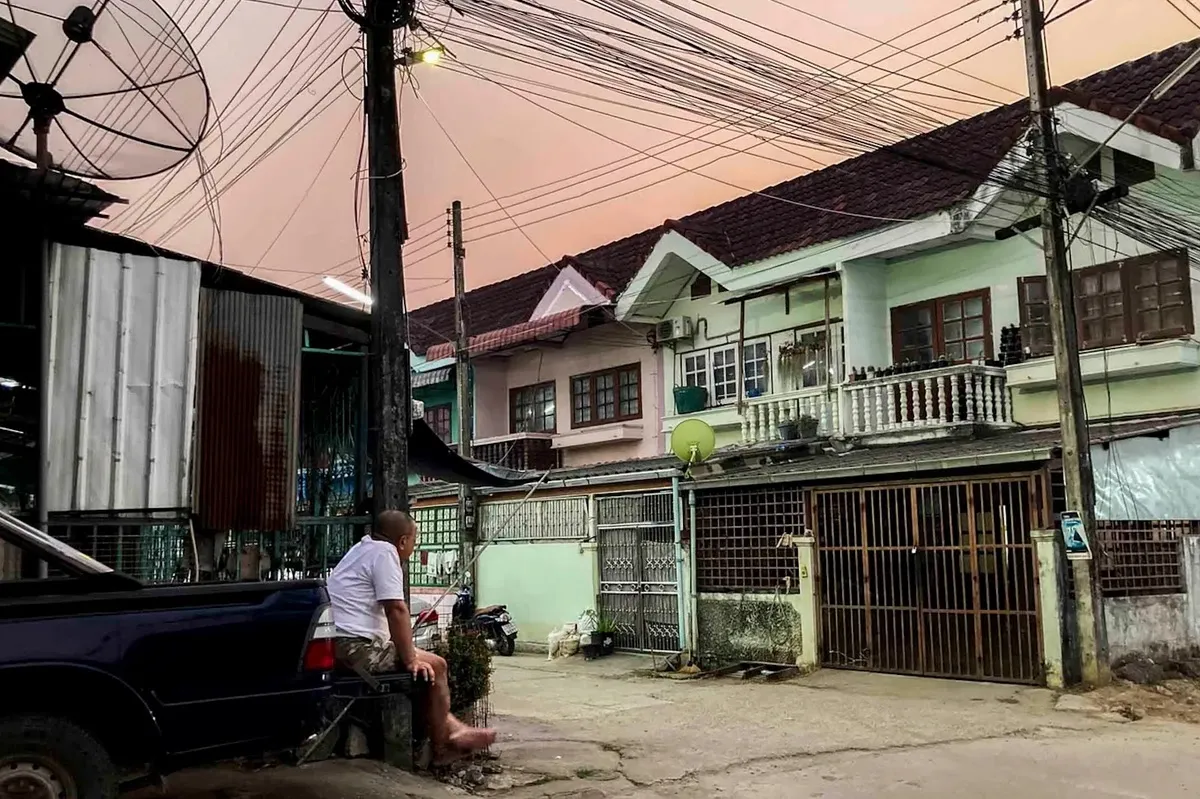
Those who came to Mae Sot before the coup could recall when there was only one bar here, with hardly any young Burmese urbanites sporting fashionable attire. Now there are over ten bars, with Burmese-owned restaurants and tea shops everywhere. The arrival of thousands of such exiles has contributed to an unprecedented economic boom, turning Mae Sot from a sleepy town into a bustling city. That said, most of the streets are still rugged, with packs of wild dogs roaming the alleys at night. You can also see 7-Elevens, a Robinson Mall, cafés, and UNHCR hotels set up to house those recognized by the UN as political refugees, in transit on their way to a third country for asylum.
I met Tin Hla, a researcher and consultant for the oppositional National Unity Government (NUG), in a restaurant frequented by political figures in exile. He kept his voice low even though the dining room was empty, drawing illustrations to explain the roles of various actors in the revolution—such as the NUG, the PDF, the EOAs, and the NUCC (National Unity Consultative Council). Born into
an upper-middle-class family in Yangon, he had completed a self-funded postgraduate degree in the UK. After fleeing to Mae Sot, he wrote reports on Myanmar for a US-funded research institute in addition to his work for the NUG.
Following the arrest of Aung San Suu Kyi and other core members of the National League for Democracy (NLD) on the day of the coup, the NUG was formed by former NLD representatives, representatives of several EAOs, and independent pro-democracy activists, partly as an organ that competes with the junta for legitimacy on the international stage.
The NUG declared an end to the 2008 Constitution of Myanmar, crafted during the junta-directed democratic transition. While the Constitution had facilitated the 2015 general election (Myanmar’s first since the one rejected by the junta in 1990), it also required 25% military representation in both houses of parliament, allowing the junta to defend the old order within a parliamentary framework.3 In the years since the 2021 coup, the NUG has been drafting a new Federal Democracy Charter in consultation with certain EAOs.
As we talked, a group of well-dressed, middle-aged Burmese men walked into the restaurant and headed straight toward a private room. Tin Hla briefly exchanged greetings with one of the men when he passed by, later explaining that he was a former NLD representative, and that many of those attending the meeting were members of the NUG.
Despite all belonging to the same community, Burmese exiles are divided into very different worlds. Those with university degrees who speak fluent English, such as Tin Hla, are active in networks tied to the UN and INGOs. Such organizations employ discourses of “human rights,” gender, ethnicity, labor, and refugee status to connect their compatriots in Mae Sot to “the international community.” Most of the INGOs previously stationed in Myanmar relocated to Thailand after the coup. Their Western employees generally choose to live in Chiang Mai, only occasionally visiting Mae Sot for frontline news.4 Burmese citizens employed by these organizations have also enjoyed access to work permits and set up residence in Chiang Mai. The organizations with more emphasis on grassroots engagement have mostly stayed in Mae Sot, either by choice or by necessity.
Ko Maung, another labor activist from Yangon who fled to Mae Sot, conducted research on Burmese migrant workers for various INGOs, but has now grown wary of these organizations’ discourse and ecology. “Their agendas are often preset from a distance by Western worldviews and priorities. Even many local organizations have to write impractical proposals just to get funding. Most participants in this system waste time producing discourse and competing for the ownership of truth.” When international funders hear “armed struggle,” they recoil in fear. Their support is reserved for what they call “nonviolent civil resistance,” the kind of activism that fits neatly into donor reports and grant proposals. The most urgent needs of grassroots activists and revolutionaries cannot be made presentable.5
In this sense, INGO activities in Mae Sot are oriented toward an international audience, with the goal of producing presentable results. The INGO ecology transforms frontline realities into spectacles of suffering, relegating them to different categories according to the aforementioned discourses such as “human rights.” By depoliticizing the plight of Burmese exiles in a game of discourse production, INGOs effectively perpetuate their hardships by distracting from efforts to transform their conditions. Ko Maung thus chose to remain in Mae Sot, instead of moving to Chiang Mai, in order to stay grounded in frontline experiences.
Many of the young Burmese exiles in Mae Sot have complicated feelings about those who moved to Chiang Mai. One of them named Kyaw Zaw told me: “Suffering is the most essential component of a revolution. Most of us who stay here are impoverished. The exiles who receive high salaries from international organizations are not in the same revolution as those who work factory jobs to survive. They basically live like white people.” After the revolution erupted, he left behind everything he owned, including two apartments in Yangon, before crossing the border into Thailand. Now every week he travels back and forth across the border to coordinate supplies into the jungle. His wife had worked as an accountant before the revolution. Now she works at a hair salon in Mae Sot 13 hours every day, with only one day off per month, earning only about $150 USD.
Here, the line between highly-educated revolutionary youths and migrant workers seeking better opportunities is gradually fading away.
As the revolutionary horizon was pushed indefinitely into the future, everyday survival became the main immediate concern for many exiles. International funding proved far from sufficient. As the funds pass through Chiang Mai, there is little left by the time they arrive in Mae Sot.6 Among the thousands of exiles arriving in Thailand, many are highly educated but only a handful can find jobs in such foreign-funded organizations. The vast majority have become cheap, expendable labor in the manufacturing and service sectors along the border, paid far below the Thai minimum wage (about $11 USD per day in 2023) in “flexible” arrangements characteristic of what anthropologist Stephen Campbell has called “border capitalism.”
At the same time, migrant workers continued to pour in as the Burmese economy collapsed after the coup, compounded by general strikes, Western divestment, a paralyzed financial system, and of course the war itself. The family members of migrant workers who stayed in Myanmar found themselves out of work. Impoverishment and deprivation have thus given “the laboring masses” just as much grievance against the junta as the educated exiles of the Spring Revolution.
Many ordinary Burmese people, including migrant workers and small business owners, still hope Aung San Suu Kyi will somehow return from prison and restore Myanmar to its status quo ante. The NUG has even saved a spot for her in the new structures of power they plan to implement. Meanwhile, the younger generation had long since lost faith in such leaders after witnessing round after round of anti-Muslim pogroms, alongside the state’s continued wars on ethnic minorities fighting for autonomy throughout the last democratic transition. For them, “normality” has never been desirable.
The Fog of “Democracy”
Whenever I spoke of “the coup,” Mg Saint, one of the anarchists from Yangon [introduced in Part I], would always retort slyly, “Which one?” Of course, he knew I was referring to the one in 2021, but he always reminded me that Myanmar’s modern history has consisted of one military coup after another, one struggle for democracy after another.
In a 2020 epilogue to The Hidden History of Burma, Burmese historian Thant Myint-U wrote, “when the National League for Democracy won its landslide election victory [in 2015], some Burmese analysts guessed that its government wouldn’t last: differences with the generals would come to a head and there would be an army takeover. But nothing of the sort happened. There was mutual distrust and at times rising tension. But at the end of the day, the former political prisoners and their erstwhile captors had found a way to work together.” Just one year later, the military chased Aung San Suu Kyi and her NLD out of the political scene.
According to mainstream accounts (both in the West and among many Burmese liberals), Myanmar’s history since independence seems to have been locked within a heroic, binary struggle between parliamentary democracy and military dictatorship: a self-sacrificing goddess leading a desperate people in need of salvation faced off against an evil, autocratic general in a series of confrontations from 1988 to 2007 and 2021.7
Mg Saint had traveled from Yangon to Mae Sot for the first time in 2009, when he was 22 years old—two years after the Saffron Revolution. There were already a lot of Burmese people in Mae Sot at the time, some having fled there after the 1988 crackdown, others after 2007, including both dissidents and migrant workers displaced by marketization throughout those two decades. Mg Saint’s parents were 88ers. He had always been suspicious of the junta’s education since childhood, eventually dropping out of college at the age of 20. The Saffron Revolution became his first taste of collective revolt. Named after the color of the robes worn by Buddhist monks, the movement attracted a great deal of attention from Western media, its image of the monk standing up to the junta quickly coming to define international conceptions of Myanmar. This was also the first time Mg Saint had witnessed protestors being slaughtered in the streets, and the start of his life as a militant. Hoping to develop a firmer grasp of political ideas, he moved to Mae Sot, where he studied English and political science at a British-run institution.
As Thant Myint-U pointed out, however, the democracy vs. dictatorship narrative, symbolized by Aung San Suu Kyi’s opposition to the junta, not only obscured existing problems, but created still more problems for the movement. The narrative implied that the West needed to save the goddess of democracy from the barbaric generals of the Orient. Consequently, every repressed movement brought a new round of Western sanctions. Myanmar thus became one of the poorest countries in Asia by the 1990s.8 The sanctions led by the UK and the US lasted for a generation, with a severity at times exceeding those against North Korea.
As of today, there are around three to four million Burmese people working in Thailand despite abhorrent labor conditions due to domestic economic woes.
Born in New York, Thant Myint-U received an elite education in the West and worked in UN peacekeeping. After the 1988 uprising, he began advocating for Myanmar’s democratization among international policymakers—supporting the intensification of sanctions. In the 1990s, however, he began to question these as it became clear that they were hurting the nation’s poor much more than weakening the junta.
In the face of these sanctions, the junta turned to a strategy of predatory development that dovetailed perfectly with China’s capitalist transition in the 1990s, providing goods for emerging Chinese markets, Burmese markets for Chinese exports, and eventually lucrative projects for investment. A minority of civilians attained wealth by leveraging connections with the military, working with highland militias in resource extraction, or investing in illegal industries. The illicit drug trade in Upper Burma and real estate development in Lower Burma complemented each other, as peasants lost their land and became migrant workers. Economic inequality returned to the level of colonial times.
After Aung San Suu Kyi was arrested again in 2003, the US imposed sanctions of unprecedented severity, which devastated the budding manufacturing industry. At least 200,000 young female workers lost their jobs overnight and had to seek employment in neighboring countries. The sanctions were not limited to trade and investment, also restricting developmental aid. This brought wave after wave of humanitarian crises as the medical and educational systems fell into near paralysis by the time of the 2007 uprising.
In 2015, the day liberal dissidents and their Western allies had prayed for since 1988 finally arrived. For the West, Aung San Suu Kyi now also became a savior for global democracy after the embarrassing outcomes of the Arab Spring. Yangon’s “middle classes” began to grow, entrepreneurs unconnected to the military emerged, a “civil society” took shape, and exiled intellectuals returned to the country hoping to work for the NLD.
Over the next few years, however, Aung San Suu Kyi’s image began to change among the younger generation. Whereas in 2009, Mg Saint had participated in a sit-in outside the prison where she was being held, in 2020, he boycotted the election with the same friends who had accompanied him at the sit-in. “We’ve seen how Aung San Suu Kyi became part of the establishment after coming to power. Now there’s no substantial difference between her and the junta.”
As a labor activist, Ko Maung also boycotted the 2020 election, straining his relationship with his family. In his view, the NLD’s five years in power had done little more than change Myanmar from the military crony capitalism of the 1990s to a neoliberal economy driven by global capital, which profited from the lifting of Western sanctions. The lower classes remained impoverished and neglected, and welfare programs were not prioritized. Despite promises by the transitional government to provide jobs through foreign investment in manufacturing, the main new sources of FDI and economic growth were actually the more capital-intensive industries such as petroleum and natural gas extraction. The transitional economy failed to create jobs for the people it displaced by appropriating agricultural land, so ruralites continued to emigrate en masse.
According to Ko Maung, “Myanmar has always needed a social revolution that addresses the question of redistribution,” but all the “democratic revolutions” since 1988 have focused entirely on political reform.
After the 2021 coup, foreign investors quickly abandoned Myanmar. American sanctions on the national bank did little damage to the junta, which managed to find loopholes while civilians were hit the hardest as always. This was especially true for workers who depended on Myanmar’s embattled garment sector, still reeling from the previous round of sanctions imposed after the Rohingya pogroms of 2017 and the pandemic disruptions of 2020.
Part III will be published in issue 3
Wu Qin is an anarchist currently living between Thailand and Germany.
Footnotes
-
Like Part I, this selection consists of revised and annotated excerpts from Diego Ge’s translation of Wu’s Chinese essay published last year as “Between Borders” on the funder’s website (frontlinefellowship.io, where the Chinese original can also be found as 國境之間). ↩
-
As discussed in Part I, Lay Kay Kaw is a town in Karen State that briefly served as a “liberated zone” for revolutionaries fleeing central Burmese cities such as Yangon, until the military attacked in December 2021, after which they fled to the jungles or across the border to towns such as Mae Sot. ↩
-
The last democratic election that was implemented took place in 1960, won by Prime Minister U Nu and his Clean Anti-Fascist People’s Freedom League. In 1962, General Ne Win led a coup, eventually transitioning to a nominally civilian “socialist” regime but continuing to rule as dictator until the 1988 Uprising. After the resignation of Ne Win, the six-month uprising ended with a takeover by a younger faction of military officers (constituted as the State Law and Order Restoration Council—“SLORC”), who ended “socialism” and instituted post-ideological military rule. Meanwhile, opposition leaders (led by Aung San Suu Kyi) formed the NLD and organized a general election in 1990, where the NLD won 80% of parliamentary seats. The SLORC declared the vote invalid and prevented the NLD from sharing power until the democratic transition began with the 2008 Constitution, culminating in the 2015 election. For details, see “The Lady and the Generals” by Soe Lin Aung and Stephen Campbell, Jacobin (2016), and A History of Modern Burma by Michael Carney (Cambridge University Press, 2009). ↩
-
The trip from Chiang Mai to Mae Sot takes about six hours by coach, although of course the higher-level employees of UN agencies and INGOs usually travel by air. (“INGO” stands for “international non-governmental organizations,” here referring to those headquartered in high-income countries). ↩
-
Many revolutionaries who shuttle between Karen State and Mae Sot have been engaged in an armed resistance that will never be acknowledged on the international stage. If the revolution succeeds, their years of sacrifice will remain blank on their résumés, while those who participated safely within the INGO system (drafting reports, hosting workshops, posing for diplomatic visits) will have polished activist profiles, rich in symbolic capital, celebrated as heroes of democracy while the true soldiers of the struggle remain invisible. ↩
-
This separation of Mae Sot from international funding would later become an advantage when USAID withdrew, since activists there had already developed networks of mutual aid, which helped them to weather the disruption with less impact than those in Chiang Mai, who were more reliant on such patronage. ↩
-
Prior to 2021, the largest uprising since independence was the “8888 Movement”—named for the peak of street protests on August 8, 1988—whether measured in terms of participants (millions), scale (nationwide), repression (thousands killed), or historical significance: in response to the protests, Chairman Ne Win (who had ruled since the 1962 coup) resigned, eventually leading to the takeover by a younger faction of military officers constituted as the State Law and Order Restoration Council (SLORC), who dissolved Ne Win’s Burma Socialist Programme Party, dispensed with its pretensions to “socialism,” and instituted a period of predatory development under direct military rule. Meanwhile, participants in the 8888 Movement formed the NLD as the main organization of the underground opposition. Aung San Suu Kyi, who lived in Oxford at the time, just happened to be visiting her sick mother in Myanmar when the uprising broke out. As the daughter of Aung San, the widely respected anti-colonial leader and “founder of modern Burma,” Aung San Suu Kyi’s 1988 pro-democracy speech at Shwedegon Pagoda resounded among the many thousands of protestors gathered there—marking her entrance onto the political stage. Her subsequent arrest, the SLORC’s rejection of the 1990 election results, and her status as political prisoner on and off until 2010 only heightened her prestige among the general populace. ↩
-
Burma is reputed to have been one of the wealthier parts of Asia during the Konbaung Dynasty (1752–1885), more or less retaining this status under British rule (with a per capita GDP of $685 in 1913 vs. $552 for China and $675 for India, calculated in 1990 international dollars), before falling well behind China and India by 1985 ($920 vs. $1,522 and $1,079), and then even significantly below Laos after the imposition of the post-1988 sanctions ($732 vs. $934 in 1991). Angus Maddison, The World Economy (OECD, 2006), pp. 215 and 304-306. ↩