Review of Creation Lake: A Novel
There is much to unpack in Creation Lake’s 400 pages. Just as Bruno looks to the past for clues about the future, Creation Lake contemplates the ashes of the milieu that produced The Call and The Coming Insurrection, leaving us to question whether we can indeed leave this world behind.
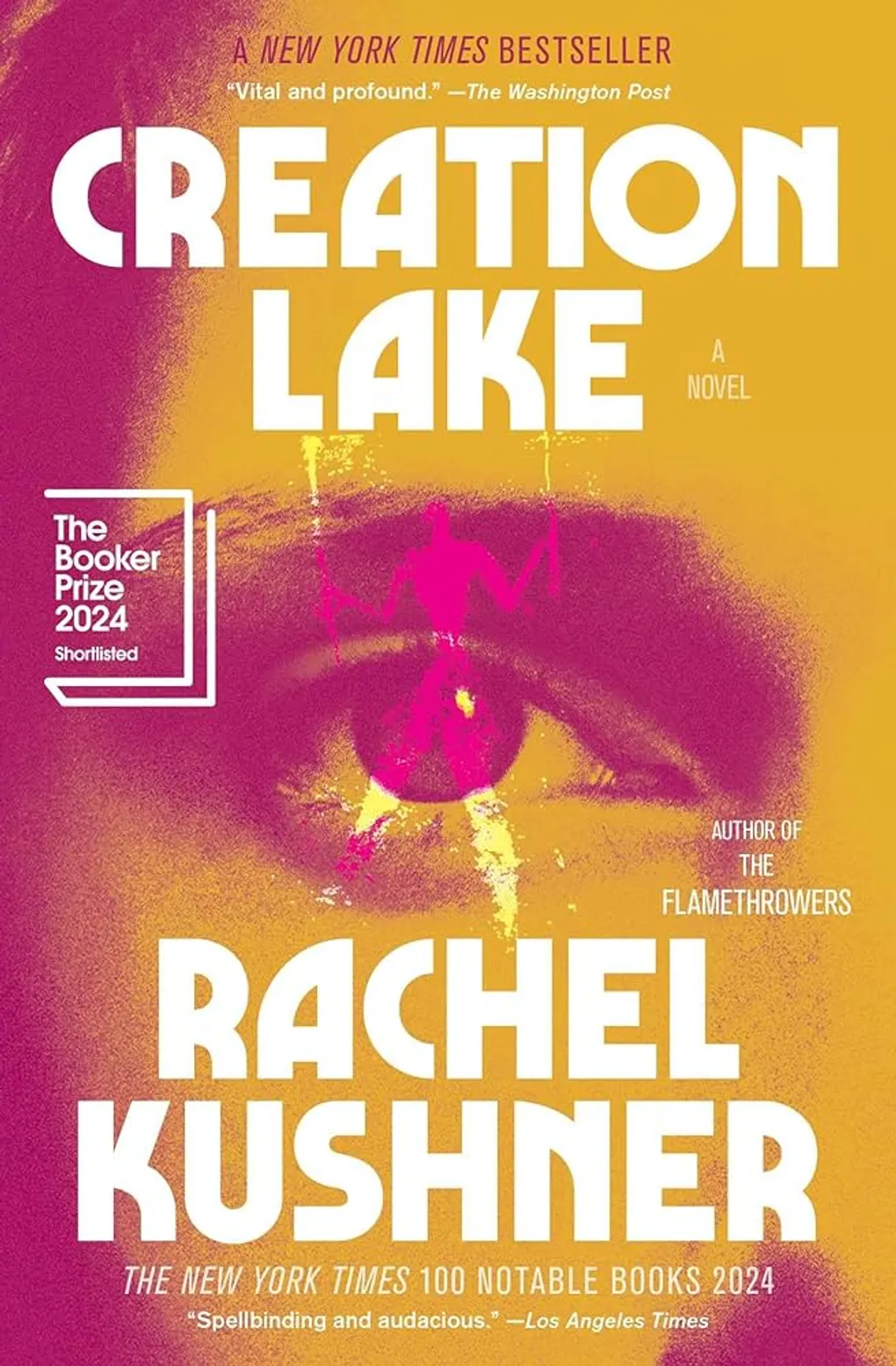
Creation Lake: A Novel, Rachel Kushner (Simon & Schuster, 2024)
Like all of us, Bruno Lacombe is trying to leave this world behind. Retreating deep within a sprawling system of caves, he places his ear against the limestone to hear echoes of the past. Much like we might comb through the ashes of 1968, or even 1917, Bruno looks to the past to navigate an uncertain future. His thoughts are shared via long-form email with the denizens of Le Moulin, a commune in the southwest of France. In these emails, Rachel Kushner’s Creation Lake perhaps shines brightest—in long missives on Neanderthals, the persecution of the Cagots, and Bruno’s ultimate conclusion that “trying to dismantle capitalism from within capitalism is a dead end.”
It is a credit to Kushner that we are not exposed to Bruno’s innermost thoughts directly, but through her narrator, Sadie Smith, who, like us, reads Bruno’s emails without his knowledge, as a voyeur and spy. Sadie is a literal agent of capital, a hired gun paid by corporate interests to entrap the communards at Le Moulin into doing something that will land them in prison. The decision to make Sadie the narrator of this story is the most interesting choice among many in Creation Lake. By portraying Le Moulin through the eyes of an outsider and invader, the novel strips away the romance of the commune, asking readers to remain skeptical of both the radicals and their enemies.
Even if readers may be sympathetic to Le Moulin’s attempts to create a different life, we are forced to contend with its shortcomings. In one striking example, the promise that “no one is alone in parenting” is immediately undercut by the fact that a daycare just so happens to be run exclusively by tired mothers. These sorts of scenes are repeated all over the commune: the women are doing the reproductive labor while the men are doing the “hard work” of woodcutting and digging post-holes. The subsequent explanation that “the division of labor between the genders reasserts itself when you try to live in a communal structure” falls even flatter when we realize that Pascal, Le Moulin’s leader, spends his days secreted away in the library accompanied by a crew of posh Parisians with elite degrees and pedigrees.
In a book which will no doubt conjure many names into the mind of the reader, Tarnac chief among them, we never get Sadie’s. A glimpse into her psyche reveals a cynic, a narcissist, and a drunk who employs sex as a weapon. Reflecting on how she had attempted to ruin a young man’s life earlier in her career, she concludes that he “had been innocent until I came along,” but is outraged when he thereafter escapes conviction by arguing she had entrapped him. Sadie’s real name then may as well be Zoe Elizabeth Voss, or maybe even Mark Kennedy, who also makes a thinly veiled appearance.
There is much to unpack in Creation Lake’s 400 pages. Just as Bruno looks to the past for clues about the future, Creation Lake contemplates the ashes of the milieu that produced The Call and The Coming Insurrection, leaving us to question whether we can indeed leave this world behind. Whatever answers we might find there, as we all settle in for another long, hot summer, Creation Lake is the perfect page-turner to be read poolside or by the flickering light of a burning precinct.
Costanzaization