What Was Recession Pop?
'Recession pop is so back.' Such was the reaction when Lady Gaga released 'Abracadabra,' the second single for her new album Mayhem. On TikTok and across social media, a consensus began to form: the last time Gaga released a hit like this the economy fell apart
by Jean Maro
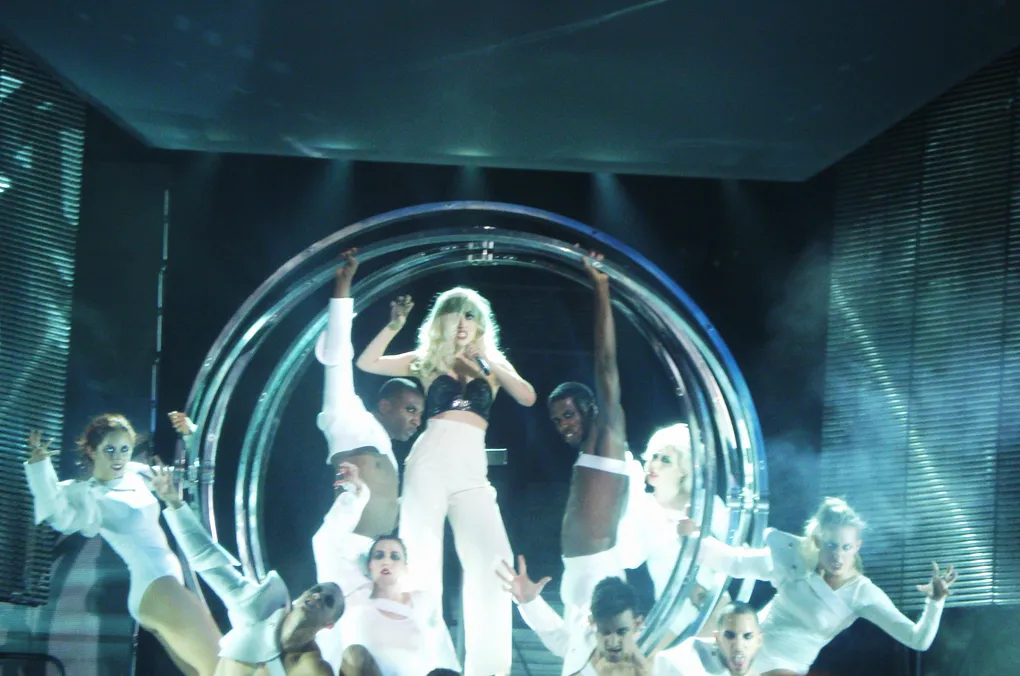
“Recession pop is so back.” Such was the reaction when Lady Gaga released “Abracadabra,” the second single for her new album Mayhem. On TikTok and across social media, a consensus began to form—last time Gaga released a hit like this the economy fell apart. But Lady Gaga isn’t the only harbinger of doom; scroll back far enough and you’ll find similar pronouncements about Kesha’s “Joyride” and even Brat Summer. Everything, it seems, foretells a crash. And how better to get a sense of what is coming than to look back to the most recent crash, the financial crisis of 2008. Faced with the difficult task of finding our bearings in the present, we read the cultural tea leaves for any hint of our fates, any confirmation of what we all already know, that things are bad and are only going to get worse. At least we have Lady Gaga.
The claim that “recession pop is back” is a claim both about the present and the past, about the relationship of pop music to the financial crisis and the relevance of that moment to our current one. In evaluating this claim, then, we must attend to both aspects. First, we must explore the relationship between pop music and the financial crisis, teasing out the complex, contradictory, and often obscured ways the crisis appeared in music of the era. Only then can we address the reemergence of recession era pop music in the national discourse and ask what these references to 2008 might reveal about the present.
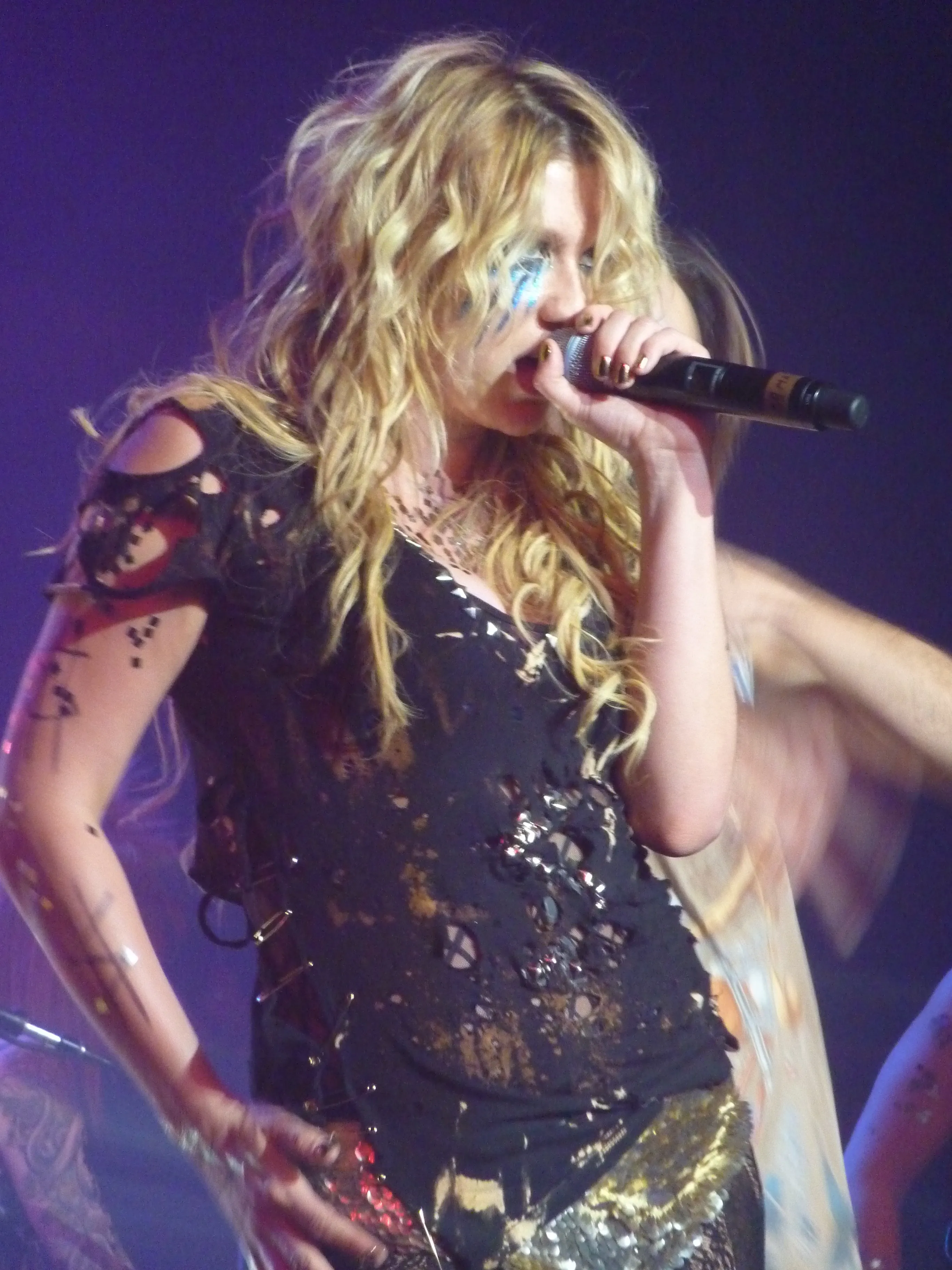
Let us take a brief trip back in time, back to when Taylor Swift had not yet given up the veneer of country, Beyoncé came into her own as a solo artist, and Rhianna collaborated with literally everyone. Yet it is a new cohort of pop stars that interests us, a group of debut artists whose meteoric rise mirrored the stock market’s catastrophic fall. Lady Gaga released her first album, Fame, in 2008, with the extended Fame Monster coming in 2009 and landing spots 2 and 3 on the Year-End Hot 100. Katy Perry left Christian music behind to dominate the pop charts, releasing One of the Boys in 2008 and Teenage Dream in 2010, the latter producing five number one singles. But the recession years really belonged to Kesha, who released “TiK ToK” in 2009 as the single for her 2010 album Animal; “Tik Tok” skyrocketed to success and became the Billboard Year-End Hot 100 Single of 2010 after spending nine weeks at number one. Kesha, Lady Gaga, Katy Perry, these are our coordinates.
Taking these three artists as our guides, we can say that recession pop was music made for dancing, with synth beats at a fast tempo, driving yet still fun and bouncy, a music made for clubs and bars if not the rave or the warehouse. These years also saw the rise of talk singing, a conversational vocal style that is less concerned with pitch or melody than rhythm and even more-so timbre, with emphasis on gritty vocal fry and sarcastic twang. Playful, irreverent, and unpolished, with deliberately heavy-handed applications of autotune and formant shifting adding to its artful nonartistry, recession pop was amateurish and delighted in it.
Although we have named Gaga, Perry, and Kesha as the giants of the moment, the style we are describing is much more pervasive—we could have easily chosen Rhianna, Pitbull, or Miley Cyrus as staples of the period. Indeed, Rhianna’s chameleon-like transition into and away from this style illustrates the extent to which recession pop’s emergence transcended individual artists. This convergence of style was partly because so much music during this period was written and produced by the same people. If anything was too big to fail it was Dr Luke, who wrote so many chart-topping hits that he practically was the pop charts for a few years. He was often joined by Max Martin, who returned to songwriting prominence in this period after writing the greatest hits of dot-com-bubble teen pop; Martin’s first number one single since 2000 was Katy Perry’s “I Kissed a Girl” in 2008. Indeed, there was hardly a hit song that one or both didn’t touch. Pop music is an industry and the giants rule. Our task is to discover why this giant took on new characteristics around the financial crisis of 2008.
Movement One: Just Dance
Recession pop is, at its heart, party music. We have already noted that the iconic songs of this era are made for dancing, but they are even more so songs about dancing, from Gaga’s “Just Dance” to Rhianna’s “Don’t Stop the Music.” Given how frequently clubs and dancing appear in these songs, one could easily be forgiven for believing that the financial crisis turned the world into one big party. Instead, we might say that the party is the entire world of this genre, the setting in which its dramas play out, with all the social dynamics of reality condensed into one endless dance.
The party world of recession pop is chaotic and dysfunctional, a space of bad decisions and questionable morals. But that does not stop the partiers, whose sarcastic, fuck-it attitude is perfectly embodied in the purposeful amateurism of the vocals. And just as the playful, irreverent vocal technique provides much of the music’s appeal, the dysfunction of the party is half the fun, as the partiers seem to revel in their dirtiness. When Kesha brags that she will “brush [her] teeth with a bottle of jack,” she embodies the exuberant depravity of the partygoers, a group at once carefree and careless, their sleaziness part of their charm.
But beneath the endless revelry lies something more sinister, that carelessness and lack of regard for the future too easily peels back to reveal a sense of desperation hiding just below the surface. Lady Gaga is possibly the most direct about this darker side of the party; her breakout hit “Just Dance” is haunted by the constant threat of sexual assault, a threat it tries to deny through its repeated instruction to forget your worries and “just dance.” The threat of sexual violence is an all-too persistent feature not only of clubs and parties, but also of the music industry itself, as Kesha’s allegations against Dr. Luke make clear. But for the most part, the danger in these songs is less physical danger and more existential dread; Kesha urges us to “make the most of the night like we’re gonna die young,” while Usher repeatedly reminds us to dance like it is the “last night of your life.” Is this existential angst merely the voice of youth protesting its inevitable end? Or is there something more?
If there is a specter haunting the party, then it is Timbaland who first gives it a name. “The Way I Are,” released just as the subprime mortgage bubble began to burst, opens with “I ain’t got no money,” and much of the rest of the song is a long litany of other things he does not have or cannot afford. Once identified, the “recession” in “recession pop” is unavoidable; Kesha originally styled herself as Ke$ha, the dollar taking up central billing in her name and in the pop charts more broadly. In this light, the constant references to dying young appear more literal than metaphorical, the expression of the decreased life chance and increased mortality rates facing those affected by the crisis. Kesha’s promise that “when I leave for the night I ain’t comin’ back” takes on a different meaning during a wave of foreclosures, a time when many suddenly found themselves without a home to return to. Dancing is less a youthful escape and more the last resort of those with nowhere else to go.
Unsurprisingly, racialized and other marginalized people were hit hardest by the crisis and the resulting recession; Black borrowers were disproportionately affected by the mortgage crisis, and those already in precarious positions were the first to be let go when companies downsized. For the teens and twenty-somethings who were the target audience for this type of pop music and the parties that music describes, however, economic turmoil posed a particular set of problems. The crisis saw a cohort of young college graduates enter the job market at the very moment that market imploded and was flooded with millions of older, more qualified jobseekers. While a middle-class twenty-something might have expected a college degree to grant them some upward mobility or at least stability, the crisis transformed their prospects into at best stasis and at worst downward mobility. Faced with an absent future, middle-class young people could only hope to tread water in the present. They were, in Katy Perry’s formulation, stuck in a perpetual “teenage dream.”
It is in this context that Timbaland’s choice to spend his last dollar on the club cover makes sense. After all, what is the point of saving if it can all be wiped out in an instant, your 401K obliterated, your home foreclosed? If there is no home ownership, no career, no upward mobility in your future no matter what you do, then what does the price of a club cover or a few drinks really matter? It is this problem that the music captures and to which it offers its own answer. If you must be down in the dirt, then you might as well revel in it. And revel it does, taking almost obscene joy in its own messy irresponsibility.
If the recession is the truth of recession pop, it is a truth it tries to avoid, one it promises to help the listener forget. The protagonists of these songs escape reality with drinking or drugs or dancing or sex. Just as the music itself provides a reprieve for the listener, the club it depicts represents an escape, a place where the real world cannot reach you and you are free of all that weighs you down. This is the promise of “Telephone,” Lady Gaga’s 2009 collaboration with Beyoncé, in which they both ignore incessant phone calls from the men they left behind to go dancing with the girls. But this escape from heterosexuality is also an escape from financial exigency—Beyoncé says that her man is “callin’ like a collector.” The prison-break imagery of the music video drives the message home: Gaga and Beyoncé will set you free, so long as you get up and dance.
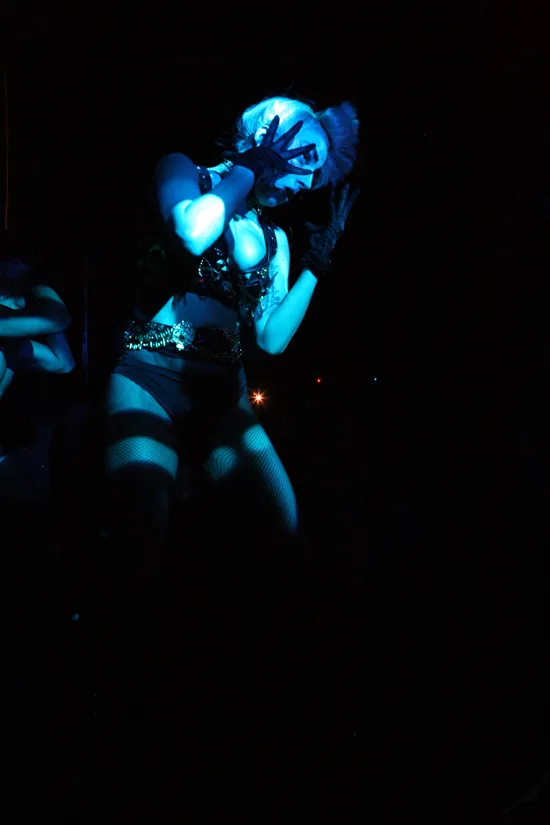
Yet as much as the music represents a kind of freedom, it is also obsessed with repetition, with the fact that its protagonists find themselves at the same clubs night after night. Do the partiers return to the dance floor out of enjoyment, or necessity? This is the central question of Katy Perry’s 2010 hit “Last Friday Night (T.G.I.F.).” After a weekend of excess and bad decisions, Perry’s partygoers “always say we’re gonna stop” on Monday morning before inevitably finding themselves back at the club to “do it all again.” Indeed, although the title of the song is “Last Friday Night,” that account of the weekend prior serves just as well as a description of the next one, the past and future fading into the “blacked-out blur” of an eternal present that parallels the arrested development of the generation dancing along.
But the partiers of “Last Friday Night” are not merely partying to pass the time. Their long litany of regrets and repeated promises to stop suggest that they arrive at the club each weekend against their wishes, as if they have no choice but to dance. While this could be read as a meditation on addiction, it is also the inversion of the normal work-week story, in which the weekend bender provides a brief glimpse of freedom before you are forced back to work on Monday morning. In “Last Friday Night,” the weekend release is figured as that which you cannot escape, while the work week appears as a period of relative reprieve. This inversion between the work week and the weekend also appears in Usher’s “DJ Got Us Fallin’ In Love.” The song begins on familiar terrain: “thank god the week is done, I feel like a zombie come back to life.” Having been introduced early, the work week then disappears from the song, which focuses instead on the party, the dancing quickly eclipsing all else. Then, the song takes a turn: “suddenly we all got our hands up, no control of my body.” Here, Usher depicts music as a form of compulsion, something that takes over his body and places it outside his conscious control. Coming directly after his description of the work week making him “feel like a zombie”—another body without consciousness—this image blurs the line between working and dancing and reveals a profound truth about unemployment. In a period of prolonged unemployment, the weekend and the freedom from work it represents expand to take up more and more of the week just as the party takes up a majority of the song. As it does so, it is no longer experienced as a relief but rather as an imposition, a fate. Usher and Perry realize the cruel irony of capitalism: the only thing worse than having a job is not having one.
“Last Friday night, we maxed our credit cards, and got kicked out of the bar, so we hit the boulevard.” Perry’s narration of her weekend is an oddly accurate description of a credit crisis ejecting people from their lives and into the streets, a motion we would see mirrored a year later in Occupy and more broadly in the rise of the riot and circulation struggle over the last half century. We might even imagine the movement of the dance floor becoming the movement of the squares, with the party representing that great collection of the un- and underemployed that might take to the streets should the music stop, a crowd that if barred entrance to the club might start crashing through the windows. “Gon’ set the roof on fire, gonna burn this motherfucker down,” says Usher.
Yet this threat that the party will overspill its bounds and become something more only ever exists in the negative. Usher is only burning things down metaphorically, after all. Despite its edginess, recession pop is not a music of rebellion except inasmuch as it refuses to grow up, a posture that is less a choice than an effect of the crisis itself. Pop music of this era might capture the affective dimensions of the crisis, but it does not provide a way out. Instead, it offers its listeners a brief reprieve, a chance to laugh in the face of misery. Let’s make the most of the night like we’re gonna die young.
Movement Two: Fallin’ in Love Again
We have arrived at an account of recession pop as both the expression of declining life chances and the distraction from that fate. But surely this is too neat, too tidy a reading, in part because we have thus far focused on only one of the dramatic personae who appear in these songs, the twenty-something partier. But there is another who we have not yet mentioned but who is central to the genre: the DJ. If the party is the world of the song, then it is the DJ that makes that world go ‘round. Only the DJ can grant the dancers one more beat drop, one more song, one more party, one more weekend, each one like the last. The constant calls for the DJ to keep the party going—Kesha’s request that the DJ “turn it up” or “blow them speakers up” and Gaga’s plea to “spin that record babe” are only the tip of the iceberg—reveal the DJ as the necessary condition for the party.
If there are two characters in this drama, then we must try to understand their roles in relationship to each other. To begin, we might say that the pairing of DJ and dancer mirrors that of the producer and consumer in a conventional capitalist economy. It is after all the DJ who produces the party by building the playlists, playing the tracks, and using his technical know-how to create the transitions, remixes, and mashups that only a skilled DJ can provide. The dancers create demand for the DJ—“spin that record babe”—and the DJ produces the music that the dancers can then consume; the party is a virtuous cycle even if the dancers are anything but. Yet, this image of the conventional economy also underscores the unconventional times in which this music was made; recession pop is, after all, the soundtrack to a specifically financial crisis.
The DJ injects life into the music and the party, promising that after each drop is another build up, that each low point will lead to greater heights. “Baby you’re a firework” and you can only go up from here, he seems to promise. It is here that we begin to see the DJ’s other function in recession pop, for surely this promise is the musical equivalent of quantitative easing: injecting more and more energy into the music, more liquidity into the system to keep the party going night after night. Low interest rates are the foundation of the party, enabling the extravagant life of the partiers who can only fulfill their role as consumers through the magic of debt, their maxed-out credit cards just one more entry in a litany of the night’s antics. The Fed is our national DJ and only the DJ can make us fall in love again.
In this light, the eternal present of the party is revealed not as the stasis of the unemployed but as the timeless world of capital’s imagination, the temporal compression of finance, where futures are real now and crisis is never or at least not tonight. The perpetual present articulated in so many of these songs is not just the arrested development of the twenty-something but the eternal youth of money, born fresh with each new transaction. What else are complex financial instruments but a way to make debt appear young again? Quantized and repackaged, its history erased and its risk level obscured, debt enters the great dance floor of the market as the perfect teenage dream.
Yet the teenage dream of this music is also all-too adult, sleazy and proud of it, reveling in its dirtiness and never stopping to apologize or clean up after. In this, our partiers represent not the victims of capital but its representatives, who can crash the entire world economy, disrupt the lives of millions, and face no real repercussions. If anyone is reveling in debauchery it is the bankers and the businessmen, who, like the partiers of Perry’s “Last Friday Night” or the protagonists of every Kesha song, can break anything and fuck anyone, safe in the knowledge that they will be bailed out to do it all again. It is always Friday for the bankers, and we all must bow down at their altar and TGIF.
If on one hand the excess of these songs—the orgy of drinking, drugs, sex, and dancing—compensates the partiers for the misery of the real world, then on the other hand it also represents the excesses of financial speculation and asset price inflation that are the flipside of that misery. If anyone has “had a little bit too much” it is the bankers. Yet, just as the extravagance of the club revealed in negative the poverty of the dancers, so too does the excess of finance reveal that there is too little in the real economy. Financialization is, after all, the last resort of capital when the profit rate is too low to justify industrial investments. If financialization turns the whole world into a party, it is because capital, like the dancers, has nowhere else to go.
The compulsion to party, the sense that the dancers do not have a choice but to enter the club, is therefore not a desperate attempt at self-soothing by a worn-down population, but the compulsion of capital to keep itself running by forcing us back, if not into work, then into motion, circulation, and consumption. “You better move, you better dance,” sings Ke$ha, the dollar sign in her name no longer the ironic expression of those without but the truth of who is speaking. Recession pop is not the musical expression of a lost generation but the pure voice of capital. And if capital is the music, then we must keep that music playing, must get up and dance to its rhythms again and again and again, and most importantly must believe that this compulsion is freedom. Work it, I’m a free bitch baby.
Movement Three: This Friday Night
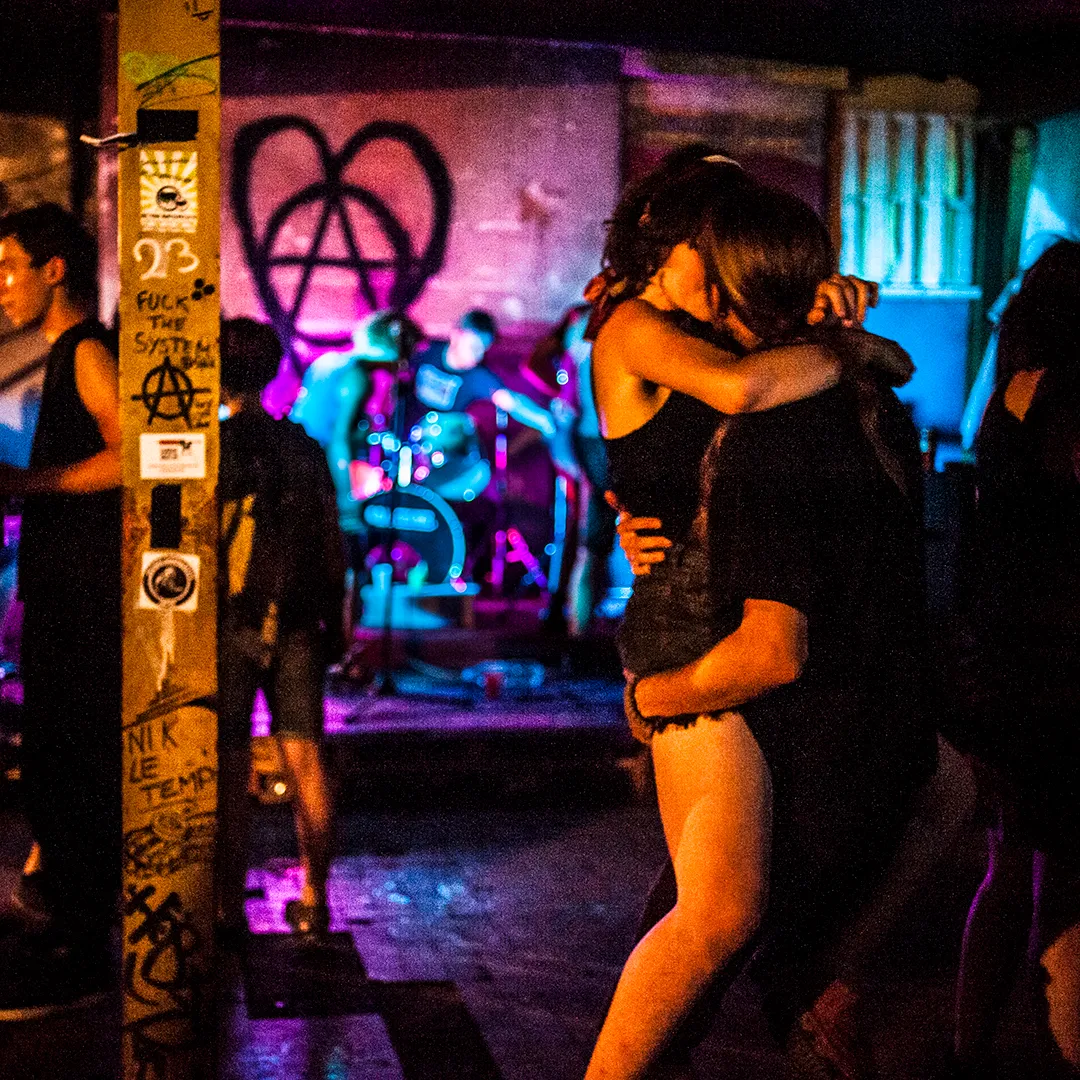
Pop music of 2008 may have been the product of the recession, but it did not reflect that world back to itself as simple representation. Instead, it captured the contradictions and tensions of that era, collecting them all onto the dance floor where they could twirl before our eyes. If recession pop was the expression of both poles of the crisis—of capital trying to turn again and again on fumes, of those ground under its wheels escaping misery for one more night—then what can we make of contemporary claims that recession pop is back?
First, let us state the obvious: we have not recovered from 2008. Despite the pundits’ claims that the economy is the strongest it has been in our lifetimes—thanks, Bidenomics!—even a brief survey of the present shows that this purported recovery has not touched the lives of most Americans. Life chances are declining, real wages are stagnant or falling, housing is inaccessible to most, and union density is in the single digits. Meanwhile, the Fed is unwilling to commit to quantitative easing for fear of further stoking inflation, leaving us all in a bit of an economic holding pattern. It appears that the only way out is another recession, a crash that can wipe the slate clean. So, when people point to the fact that Lady Gaga or Kesha are still making music 15 years after their debuts, they are simultaneously recognizing that 2008 is still with us too, both as remnant of the past and a grim vision of the future.
But in the popular parlance, a new Lady Gaga album isn’t just a reminder of the status quo, but a recession indicator, a promise that another crash is just around the corner. The frequency of these claims and the variety of the indicators named—pop music, art deco jewelry, heroin chic aesthetics—shows that the next crash is always looming in the popular imagination, an inevitability always already begun. Recession pop discourse thus indexes crisis in two registers: cyclical and secular, the coming crash and the long decline. Indeed, it seems to conflate these two scales of crisis; like recession pop itself, which depicted decline as a stagnant series of repeated nights out, so too does recession pop discourse register decline not as one long trajectory but as a cycle of catastrophes we are doomed to live again and again. This focus on repetition can distract from the secular nature of crisis, with the circular motion of the business cycle obscuring the larger downward spiral. However, the formulation of recession pop and its reference back to 2008 also recognizes that recovery from one crash is never finished, that we are still in some ways living in the aftermath of 2008, a persistence that reveals each crash not as mere repetition but as just one moment in a long secular decline. “Is recession pop back” is nothing other than the question of what is cyclical and what is secular, what is returning and what never left.
Conversations about recession indicators represent a popular attempt to understand a world that is too vast and complex for most to grasp, one that seems always to be producing some new misery. However, in this search for signs and portents, many have identified a real change in popular music. The last year saw a shift away from the vibey, sad-girl music that has shaped the pop landscape since 2020. Much of the post-2020 musical scene was defined by its atmospheric qualities rather than a pronounced beat or even strong melodic content—this is clearest in Taylor Swift’s artsy twin records or Phoebe Bridgers and all her imitators, but is also true of less folksy fare, including The Weeknd’s lush synth soundscapes and Billie Eilish’s flat vocals. In comparison, pop music in 2024 was dominated by Charlie XCX, Chappell Roan, and Sabrina Carpenter, all artists who abandoned atmospheric whisper pop for catchy melodies, strong vocal performances, or a danceable beat. While it would be an overstatement to say that music transformed in 2024, the shift has been noticeable. A new Lady Gaga album is just the icing on the cake.
If music has changed since 2020 then it is certainly not the only thing that has done so. The last few years have seen the end of COVID precautions and the state’s push to “return to normal” despite COVID’s continued presence. The effectiveness of this “return to normal” policy is evidenced by both the literal return of maskless crowds to clubs and other public spaces and the figurative return of the club via the return of dance music to the pop charts. As we have seen, the club is also always a stand-in for work, and so it is no surprise that it has reemerged as a cultural touchstone at the moment when millions are leaving their homes and returning to the office. Just as in 2008, there is a tension here between freedom and compulsion: we are at once free of “lockdown”—never a reality in the US as it was elsewhere—and compelled to return to work. And like in 2008 when the bank bailouts left the rest of us high and dry, we are now facing the rollback of COVID-era social programs amidst a persistent inflation that at once raises the cost of living and limits the Fed’s options for addressing the ongoing malaise. Once again, we all lose, and everywhere there is a sense that things are getting worse even as we re-enter the clubs and restaurants and workplaces.
COVID continues to haunt the present, and it is not the only remnant of 2020 that still lingers in the popular imagination, for we are also living in the wake of the George Floyd Uprising. There was a moment in early summer 2020, as the fires of the third precinct spread from city to city, when everything became dizzyingly, terrifyingly possible and it seemed that we might “burn this motherfucker down” for real this time. But that window of endless possibility is closed, at least for now, and we find ourselves back to the grind and to the dance. But it is clear that, for many, this return brings with it a sense of relief—no longer required to care or at least pretend to, they can forget the promises they made in 2020 and get back to enjoying themselves. The return of danceable music registers both movements at once, the closing down of the possibilities opened by that rupture and the permission to ignore the commitments that moment demanded of us.
So we return to normal—to work, to electoral politics, to the clubs and bars and dancefloors. We are told that it is Brat Summer and we get up and dance, smoke a cigarette, make some bad decisions. Rise and repeat. A compulsion that feels like freedom, or a freedom that is nevertheless forced on us: maybe recession pop never left.
Jean Maro is a communist from Appalachia currently living on the west coast.